
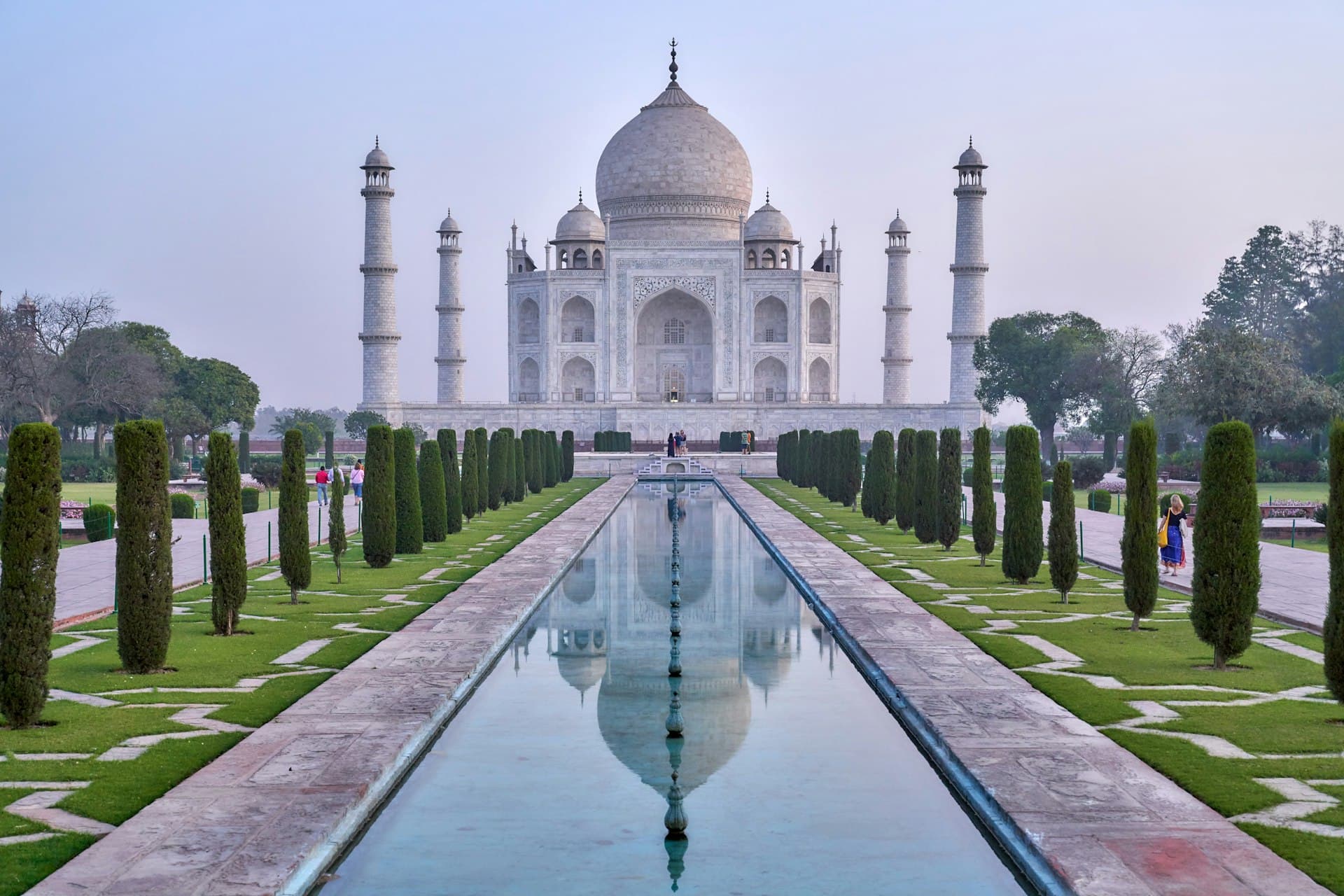

Kazakhstani passport holders can apply for the Indian eVisa entirely online — no appointment at the Embassy of India in Astana or the consulate in Almaty. Approval typically arrives by email in 24 to 72 hours.
90 days
Maximum stay per visit
24–72 hrs
Typical processing time
Up to 5 years
Longest validity offered
Not eligible
Visa on Arrival
100% online
No embassy visit
Overview
Kazakhstan is a significant and fast-growing source market for Indian medical tourism. India's private hospitals in Delhi, Gurugram, Mumbai and Chennai treat large numbers of Central Asian patients, particularly for cardiac surgery, oncology, orthopaedics and fertility treatment, and the combination of specialist capability and cost has made India a default destination for care that is expensive or unavailable at home.
Alongside medical travel sits a growing leisure market — Goa and Kerala in particular have become popular winter destinations for Kazakh travellers — plus business travel in energy, mining and pharmaceuticals.
Every Kazakh citizen needs a visa granted before departure. There is no visa-free entry and no visa on arrival. For tourism, business and medical travel the eVisa handles it entirely online, and Kazakhstani passport holders receive up to 90 days per visit on the tourist eVisa. Almaty has nonstop service to Delhi at around four hours, which makes India closer than most Kazakh travellers expect.
At a glance
Eligibility
Yes. India extends visa-free entry only to Nepal and Bhutan, and Visa on Arrival only to Japanese, South Korean and Emirati nationals. Kazakh citizens must hold an approved visa before boarding, and Air Astana or your carrier will verify it at the gate.
Choose the category by purpose. Tourism, sightseeing, visiting friends and wellness travel fall under the tourist eVisa. Treatment at an Indian hospital requires the medical eVisa, which is the right category for the large medical stream and allows accompanying family to travel as medical attendants. Business meetings, trade fairs and supplier visits require the business eVisa. Employment, journalism, academic research and long-term study — including medical degrees at Indian universities, a well-established route from Central Asia — are outside the eVisa scheme and need a regular visa.
The student point is worth stating plainly: many Central Asian students study medicine and engineering in India, and an eVisa cannot be used for that. A student visa must be arranged through an Indian mission before travel and cannot be converted from an eVisa once you are in India.
Stay & validity
Kazakh citizens are permitted up to 90 days per visit on the tourist eVisa. The 30-day version allows double entry, with its 30 days counted from your arrival date. The one-year and five-year versions are multiple-entry, and their validity begins on the date the Indian government grants the application.
For medical travel the medical eVisa is the better instrument: 60 days from first entry with triple entry, structured around treatment plus follow-up consultations. Accompanying family can apply for medical attendant visas linked to the patient's application, which matters when a patient needs support through surgery and recovery.
Sixty days is generally sufficient for a treatment episode, but complex cases sometimes run longer. Because the eVisa cannot be extended from inside India, discuss the expected duration with the hospital before choosing a visa — for genuinely extended treatment, a regular medical visa from an Indian mission may be more appropriate.
The business eVisa allows up to 180 days per visit within a one-year multiple-entry window.
Pricing
Live government fees and service charges for Kazakhstani passport holders, shown all-in — nothing further is charged later.
Your nationality is pre-selected as Kazakhstan
Requirements
Everything Kazakhstani passport holders need before starting an application. The first five items apply to every applicant; the rest are specific to your nationality or visa type.
Passport bio-data page — a clear colour scan or photo showing your photograph, full name, date of birth, passport number and expiry date
Recent passport-style photograph — square format, plain white background, full face visible, no shadows and no headwear other than for religious reasons
A valid credit or debit card to pay the government fee and service charge
Your return or onward ticket details, or at minimum your intended departure date
The address where you will be staying for your first night in India
Simple process
Four steps, entirely online, with our team checking every field before anything reaches the Indian authorities.
Enter your passport details exactly as printed, choose your visa type and duration, and upload your photo and passport data page.
Our team checks your photo dimensions, passport scan clarity, name spelling and date formats before anything is submitted.
Your application goes to the Government of India on your behalf, and we keep you posted at every status change.
Print it or keep it on your phone, and we explain exactly how to present it at your port of entry in India.
Standard processing takes 48 to 72 hours and express handling 24 to 48 hours. Both are business-day estimates, and Indian public holidays — numerous and often state-specific — extend them.
Apply at least a week before departure, and considerably earlier for medical travel. The hospital letter is a prerequisite for the medical eVisa and obtaining it usually takes longer than the visa itself — for urgent treatment, request it the moment the appointment is confirmed and run the two processes in parallel rather than in sequence.
Separate from your eVisa, every foreign national entering India must complete the digital e-Arrival Card before boarding. It replaces the old paper disembarkation form and is required on every single visit, whatever visa you hold.
Getting there
Almaty has nonstop service to Delhi at around four hours, and Delhi is a designated eVisa port and the largest medical hub in North India. Astana and other cities connect via Almaty, a Gulf hub or Tashkent.
Best time to go
October to March is India's dry season and the most comfortable window for both leisure travel and medical treatment. Recovery in 45°C heat is genuinely harder, so if your treatment dates are flexible, the cooler months are worth choosing.
For medical travel the Indian hospital calendar matters more than the weather. Diwali and Holi affect staffing and elective scheduling at many private hospitals, and regional festivals close offices in specific states. Confirm appointment dates directly with the hospital rather than assuming continuous operation.
The Kazakh winter makes the contrast with Goa and Kerala especially appealing, and December to March is peak season for that. Avoid the northern plains in May and June, when temperatures exceed 45°C. India is 1 to 1.5 hours behind Kazakh time depending on the zone, so there is effectively no jet lag on a four-hour flight.
Avoid these
Refusals are rare, and almost always technical rather than substantive. These are the problems that come up most often on applications from Kazakhstan — we check for every one of them before submitting.
The defining Central Asian problem. Kazakhstan has been moving from Cyrillic towards Latin script, and names may have appeared differently on older documents — Aleksandr or Alexander, Nurlan or Nurlana, Zhanna or Janna. Your current passport uses one specific form, and the eVisa must match it exactly, as must your airline ticket. Using the spelling from an older passport is the most frequent cause of mismatch.
Kazakh and Russian-influenced names carry patronymics and gendered endings — Ivanov and Ivanova, Nursultanovich and Nursultanovna. Use exactly the form printed on your own passport, not a parent's or spouse's version, and reproduce it in the same fields the passport uses.
The most consequential error on this route, given how much of the traffic is medical. The medical eVisa allows triple entry for follow-up consultations and lets accompanying family apply as medical attendants — structure a tourist eVisa does not provide. Indian hospitals increasingly ask which visa you hold, and a mismatch can complicate admission.
The medical eVisa requires a letter from a hospital on India's recognised list, and obtaining it takes longer than the visa. Request it as soon as your appointment is confirmed and run both processes in parallel, particularly for urgent treatment.
Many Central Asian students take medical and engineering degrees in India, and an eVisa cannot be used for it. A student visa must be arranged through an Indian mission before travel, and it cannot be converted from an eVisa once you are in the country.
Photo rejected on technical grounds
By far the most common cause of delay. The photograph must be square, on a plain white background, with your full face visible and no shadow behind your head. Cropped selfies and phone photos taken against a cream wall are routinely bounced back.
Passport scan unreadable
Glare across the machine-readable zone, a cut-off corner, or a scan where the passport number is blurred will stall the application. Photograph the page flat, in daylight, with no flash.
Applying too close to departure
The eVisa must be granted before you fly, and airlines check it at the gate. Applications submitted the night before a flight leave no room for a document re-upload.
Conditions
These conditions are set by the Government of India and do not vary by nationality. They are worth reading before you book, because two of them — the port-of-entry rule and the restricted-areas rule — catch out a lot of otherwise well-planned trips.
Validity is measured from your date of arrival in India, not from the date you apply. You also need at least two blank pages for immigration stamps.
The India eVisa is accepted at India's designated eVisa airports and authorised seaports. It cannot be used to cross a land border, so overland arrivals from Nepal, Bhutan, Bangladesh or Pakistan need a different visa.
Every person travelling needs their own eVisa and their own passport, including infants and children. Children cannot be added to a parent's application.
An eVisa does not grant access to Protected Areas, Restricted Areas or Cantonment Areas. Parts of Arunachal Pradesh, Nagaland, Mizoram, Sikkim, Ladakh, the Andaman & Nicobar Islands and Lakshadweep require a Protected Area Permit or Restricted Area Permit in addition to your visa.
You cannot extend an eVisa from inside India or convert it into another visa category. If your plans change, you must leave and apply again.
Diplomatic, official and service passports are not eligible for the eVisa route, and neither are international travel documents or refugee travel documents.
Consular services
Neither mission is involved in an eVisa application, which is handled entirely online. They cover what the eVisa cannot: student visas for study at Indian universities — a well-established route from Kazakhstan — plus employment, journalism and research visas, regular medical visas for extended treatment, and OCI matters.
FAQs
The questions Kazakhstani passport holders ask most often about applying for an Indian eVisa.
The medical eVisa. It allows 60 days from first entry with triple entry — designed around treatment plus follow-up consultations — and accompanying family members can apply for medical attendant visas linked to your application. You will need a letter from the treating hospital, which must be on India's recognised list. Request it as soon as your appointment is confirmed, because it usually takes longer to obtain than the visa.
The eVisa cannot be extended or converted from inside India, so discuss the expected duration with the hospital before choosing a visa. Sixty days covers most treatment episodes, but for genuinely extended or multi-stage care a regular medical visa from an Indian mission may be more appropriate. It is far better to establish this before travelling than to discover the limit mid-treatment.
Up to 90 days per visit on the tourist eVisa. The 30-day version allows 30 days with double entry. The medical eVisa gives 60 days from first entry with triple entry, and the business eVisa up to 180 days per visit within a one-year multiple-entry window.
Exactly as it is transliterated on your current passport, character for character. Kazakhstan has been moving from Cyrillic towards Latin script, so names may have appeared differently on older documents — only the current passport spelling is correct for the visa. Note too that patronymics and gendered endings must match your own document rather than a family member's, and your airline ticket should use the same form.
No. Study at an Indian university requires a student visa arranged through an Indian mission before you travel, and an eVisa cannot be converted into one once you are in India. This is a well-established route from Kazakhstan, so it is worth being clear: arriving on a tourist eVisa intending to change it locally does not work.
Fees are set by nationality and duration, so the pricing panel on this page loads live figures for Kazakhstani passport holders across all available options. You can compare 30-day, one-year and five-year prices side by side, and the amount shown is the full cost including our service fee.
Yes — Air Astana flies nonstop from Almaty to Delhi in around four hours, which makes India closer than many Kazakh travellers expect. From Astana, Shymkent or Aktau you will connect via Almaty, Dubai, Sharjah or Tashkent. Gulf routings open up Chennai, Mumbai and Kochi.
No. Indian Visa on Arrival is limited to Japanese, South Korean and Emirati nationals. Kazakh citizens need an approved visa before boarding, and Air Astana or your carrier will verify it at the gate.
Your nationality is already set to Kazakhstan. Complete the form in under ten minutes, and our team will check every detail before it reaches the Indian authorities.
Other nationalities
Stay limits, fees and requirements differ by passport. Here are the guides for other nationalities.