
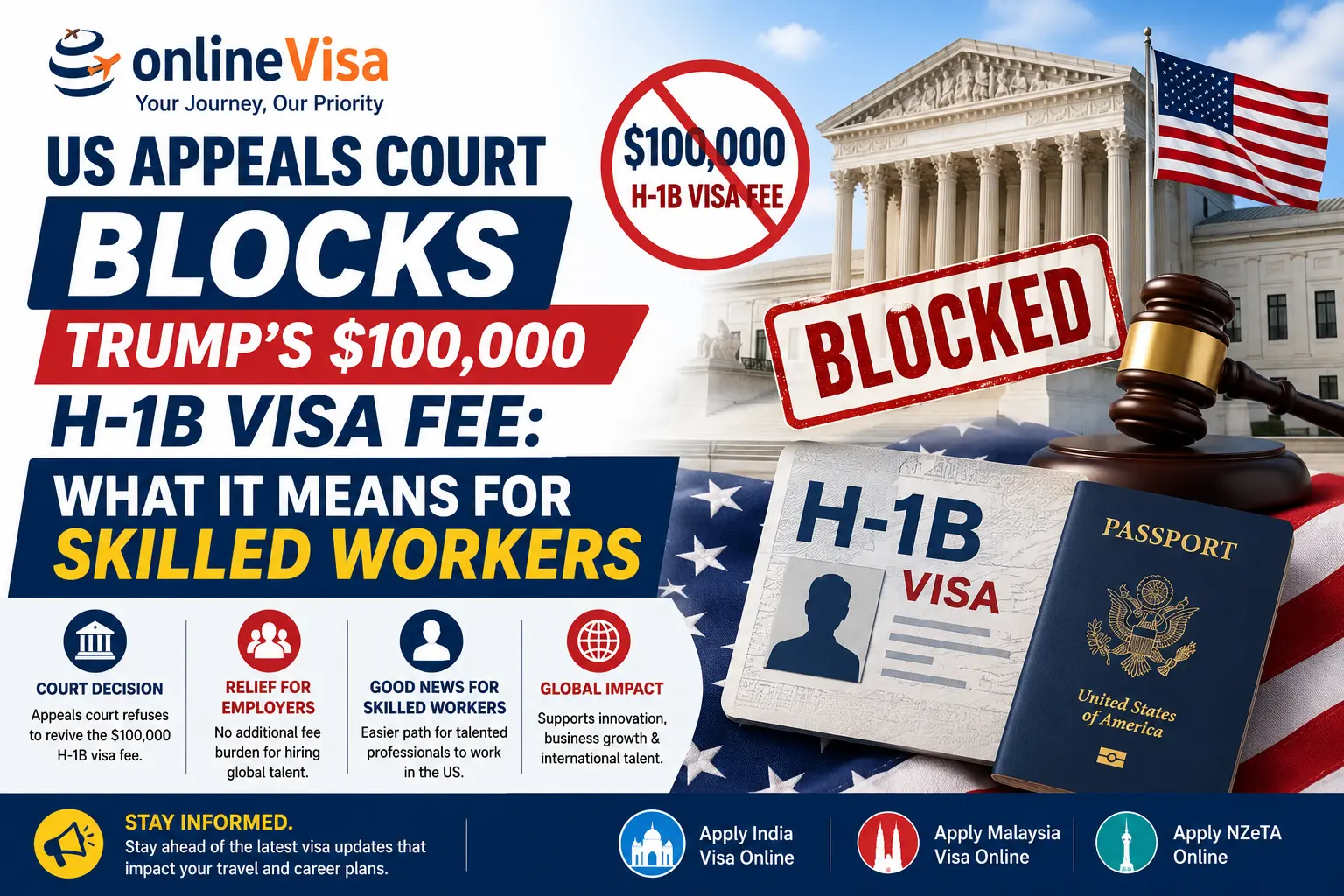
US Appeals Court Blocks Trump's $100,000 H-1B Visa Fee: What It Means for Skilled Workers
A US appeals court has refused to revive the $100,000 H-1B visa fee. Learn what the ruling means for employers, skilled workers, and international travelers in 2026.
The decision is particularly important for the technology sector, where the H-1B program plays a crucial role in hiring highly skilled international workers. It also offers reassurance to thousands of professionals, especially Indian nationals, who rely on the H-1B visa to work in the United States.
What Was the $100,000 H-1B Visa Fee?
In 2025, the Trump administration introduced a policy requiring employers to pay a one-time $100,000 fee for new H-1B visa applications. The stated objective was to encourage companies to hire American workers before recruiting talent from overseas.
However, the proposal immediately faced strong opposition from technology companies, employers, universities, and several state governments. Critics argued that such a dramatic increase in costs would discourage businesses from hiring skilled professionals and place an unnecessary financial burden on employers.
Appeals Court Refuses to Restore the Fee
The latest ruling represents another setback for the proposed policy.
A federal appeals court declined the administration's request to temporarily restore the fee while its appeal moves forward. As a result, employers are not required to pay the additional $100,000 charge for new H-1B applications at this time.
The appeals court agreed that the government had not demonstrated sufficient grounds to suspend the earlier ruling that blocked the policy.
Why Was the Fee Challenged?
The legal challenge centered on whether the executive branch had the authority to impose such a substantial fee without approval from Congress.
The lower court concluded that the $100,000 charge functioned more like a tax than a standard administrative fee. Because taxes generally require congressional authorization, the judge ruled that the administration had exceeded its legal authority. The appeals court has now allowed that ruling to remain in effect while the broader appeal continues.
Why This Matters for Employers
The H-1B visa program enables US employers to recruit professionals in occupations requiring specialised knowledge. It is widely used across industries such as:
- Information Technology
- Artificial Intelligence
- Software Engineering
- Cybersecurity
- Data Science
- Healthcare
- Engineering
- Financial Technology
A mandatory $100,000 fee would have significantly increased recruitment costs, particularly for companies that regularly hire international talent. For many employers, the appeals court's decision removes a major financial uncertainty for now.
Positive News for Skilled Foreign Professionals
The ruling is especially encouraging for international professionals hoping to build careers in the United States.
Indian nationals consistently receive the largest share of H-1B visas, with many working in leading technology companies and multinational organisations. Maintaining the current fee structure makes it easier for employers to continue sponsoring qualified candidates without facing extraordinary additional costs.
Although the legal dispute is not over, the court's decision provides temporary stability for both employers and applicants.
What Happens Next?
The appeals court's decision does not permanently end the case. The administration's appeal will continue through the judicial process, and a final ruling could still determine whether the policy can ever be enforced.
Legal experts note that the case may ultimately reach a higher court if the dispute continues. Until then, the earlier court order blocking the fee remains in place.
Impact on Global Mobility
The case also highlights how immigration policies can influence international talent movement.
Professionals working abroad often travel internationally for business meetings, conferences, family visits, and holidays. As governments continue updating immigration systems, travellers should stay informed about changing visa requirements.
Many countries now offer convenient online travel authorisations that simplify international travel. Depending on your destination, you may be able to:
- Apply India visa online for tourism, business, or medical visits.
- Apply Malaysia visa online if your nationality requires a visa before travelling.
- Apply NZeTA online before visiting New Zealand if you are from an eligible visa-waiver country.
Digital visa systems continue to reduce paperwork and make international travel more accessible for millions of visitors.
Tips for International Travellers
Whether you are travelling for work or leisure, good preparation can help avoid unnecessary delays.
- Check the latest visa requirements before booking travel.
- Ensure your passport remains valid throughout your journey.
- Apply for visas or electronic travel authorisations well in advance.
- Keep digital and printed copies of important travel documents.
- Monitor official government announcements for any changes to immigration rules.
Final Thoughts
The US appeals court's refusal to revive the $100,000 H-1B visa fee is an important development for employers and highly skilled professionals worldwide. While the legal battle continues, the ruling means businesses can continue submitting new H-1B applications without the additional charge for now.
For international travellers and professionals, the case serves as another reminder that immigration policies can change quickly. Whether you're pursuing career opportunities abroad or planning your next international journey, staying informed about the latest visa rules can help ensure a smoother travel experience.
Related Articles
 Travel & Visa News
Understanding US Visa Revocation Under Trump Administration
 Travel & Visa News
U.S. ESTA vs. New Zealand eTA: Document Requirements for VWP Nations
 Travel & Visa News