
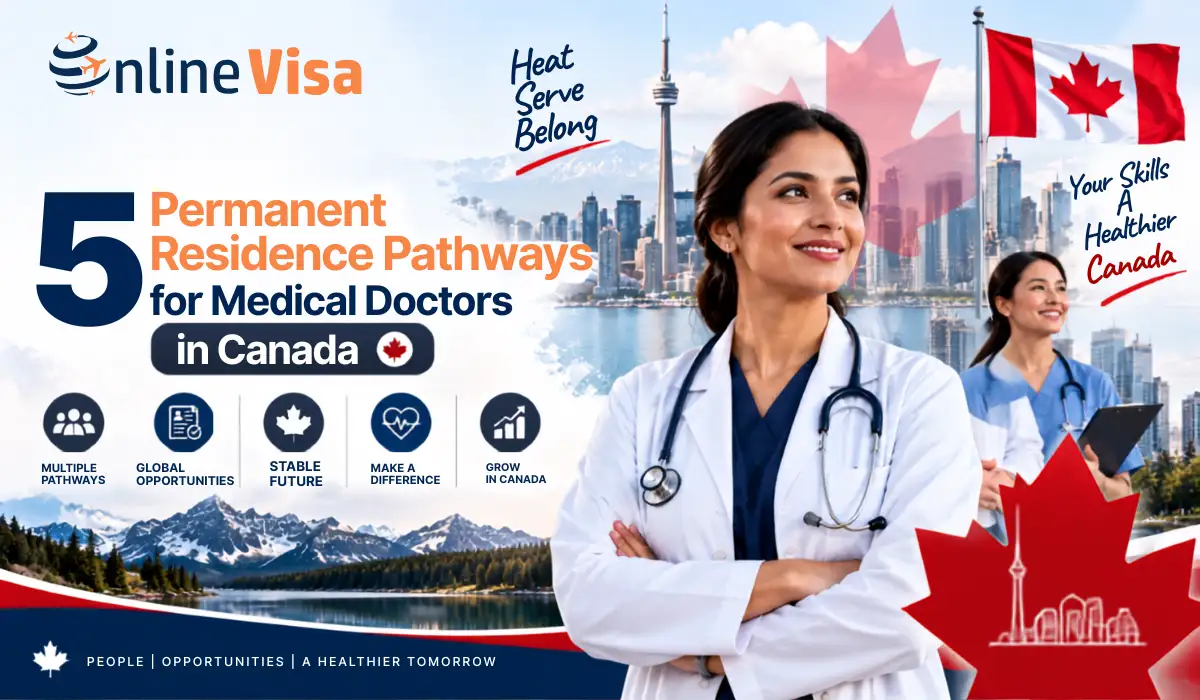
5 Permanent Residence Pathways for Medical Doctors in Canada
Canada offers five distinct PR routes for qualified foreign doctors. Learn which pathway fits your profile and what requirements you'll need to meet to immigrate.
Canada Needs Foreign Doctors: Your PR Opportunities
International medical graduates make up nearly one-third of Canada's family physicians today, and healthcare demand keeps climbing. If you're a foreign-trained doctor considering a move to Canada, you have multiple permanent residence pathways designed specifically for your profession. Each route has different requirements, timelines, and location preferences—so finding the right fit depends on your work experience, language skills, and career goals.
This guide walks you through all five PR options available to medical doctors and explains what you'll need to succeed.
The Five PR Pathways for International Medical Graduates
Canada has reserved federal immigration capacity and created specialized programs to attract foreign doctors. Here are your main options:
- Express Entry: A federal pathway with a dedicated medical doctor category for those with Canadian work experience
- Provincial Nominee Program (PNP): Provinces nominate doctors with job offers; 5,000 federal spaces are reserved annually
- Atlantic Immigration Program: Fast-track PR for doctors settling in participating Atlantic provinces
- Rural Community Immigration Pilot: A pathway for doctors committed to rural practice
- Francophone Community Immigration Pilot: Supports French-speaking doctors in minority communities
Express Entry for Medical Doctors
The Express Entry medical doctor category offers a federal route to permanent residence. To qualify, you'll need at least one year of full-time Canadian work experience as a licensed physician within the past three years. This means you typically start on a work permit, gain Canadian practice experience, then apply for PR—a process that usually takes around six months.
Your Comprehensive Ranking System (CRS) score determines your chances. Medical doctors often score higher than other professions due to education and language requirements, which works in your favour. You'll need to meet the language proficiency thresholds (usually CLB 9 or higher in English, or equivalent in French) and pass a thorough background check.
Provincial Nominee Program: The Fastest Route
The PNP is often the quickest pathway for doctors with a firm job offer. Canada reserves 5,000 federal immigration spaces annually for medical professionals nominated by provinces and territories. Key advantages include:
- Faster initial work permit approval (as little as 14 days in some cases)
- You can begin practicing immediately while your PR application processes
- Higher approval odds compared to federal-only streams
- Flexibility in location—each province runs its own streams
You'll typically need a confirmed job offer or letter of support from a Canadian employer or health authority. Some provinces also accept applicants based on qualifications alone if they're on the province's occupation demand list.
Atlantic Immigration Program and Rural Options
If you're open to practicing outside major cities, two programs deserve attention.
Atlantic Immigration Program
This program fast-tracks PR for doctors committed to Nova Scotia, New Brunswick, Prince Edward Island, or Newfoundland and Labrador. You'll need a confirmed job offer from an Atlantic employer and designation from a provincial immigration office. Processing times are often shorter than other streams, sometimes as quick as six months from application to PR approval.
Rural Community Immigration Pilot
Designed for doctors willing to work in smaller communities outside major population centres, this pilot removes some standard barriers. Communities must sponsor you, which means you'll need employer support, but the bar for other factors can be lower than federal streams.
Francophone Community Immigration Pilot
If you're a French-speaking doctor, this program opens pathways to settle in Francophone minority communities outside Quebec. It supports both recruitment and retention of French-language healthcare providers. Many communities actively recruit doctors, making this a viable route even without prior Canadian experience.
What You Must Do Before Practicing
Immigration approval is only half the battle. Before you can see patients in Canada, you'll complete a separate process:
- Credential Assessment: Your foreign medical qualifications must be evaluated by your province's medical regulator. This typically takes 4–12 weeks and confirms your degree meets Canadian standards.
- Provincial/Territorial Medical License: You'll take licensing exams (like the Medical Council of Canada exams) and apply for your provincial license. This can take 6–18 months depending on your background and the province.
- Language Testing: Most provinces require English or French proficiency (CLB 8–9 minimum). Tests like IELTS, TOEFL, or TEF are widely accepted.
- Online Visa Application: Submit your immigration application through the online visa application portal. You'll track your status and receive updates digitally throughout the process.
The medical licensing process runs in parallel with immigration, so you can start exams and credential assessment early to avoid delays once your PR is approved.
Choosing the Right Pathway for You
Your best option depends on several factors:
| Your Situation | Best Pathway | Why |
|---|---|---|
| You have a Canadian job offer | PNP or Atlantic Program | Fastest processing; employer support strengthens your case |
| You're willing to move to smaller communities | Rural Pilot or Atlantic Program | Lower competition; employer sponsorship often available |
| You already have Canadian work experience | Express Entry Medical Category | Your Canadian practice counts toward PR eligibility |
| You speak French fluently | Francophone Pilot | Fewer applicants; strong language advantage |
| You don't have a job offer yet | Express Entry or Provincial streams without offers | Broader eligibility; build experience first |
Key Takeaways
- Canada has five distinct PR pathways for doctors; your work experience and location flexibility determine which suits you best.
- The PNP and Atlantic programs often offer faster timelines if you have a job offer in hand.
- Credential assessment and provincial licensing are mandatory and separate from immigration approval.
- Work permits can be approved within two weeks for some PNP nominees, allowing you to start practice before PR is finalized.
- Language proficiency (CLB 9+ English or equivalent French) is critical across all pathways.
- Start credential assessment and licensing exams early—these often take longer than immigration processing.
Frequently Asked Questions
Can I apply for Canada PR as a doctor without prior Canadian work experience?
Yes. While the Express Entry medical category requires one year of Canadian work experience, other pathways don't. The PNP, Atlantic, Rural, and Francophone programs accept doctors based on qualifications, language skills, and job offers alone. You'd start on a work permit, gain Canadian experience, then transition to PR—or apply for PR directly through provincial nomination if they accept your profile.
How long does the entire process take from application to practicing medicine?
Typically 12–24 months. Immigration approval takes 6–12 months depending on your pathway. Credential assessment takes 4–12 weeks. Licensing exams and provincial license approval take 6–18 months. These processes often overlap, so you might begin exams before your PR is finalized. Starting early on medical licensing while your immigration application is underway reduces total time significantly.
Do I need a job offer to apply through the PNP?
Most PNP streams for doctors require a job offer or letter of support from a Canadian employer. However, some provinces add doctors to occupation-in-demand lists without requiring a pre-arranged job. Check your target province's specific requirements, as they vary. Even without a job offer, you can pursue Express Entry or other federal pathways.
What medical exams do I need to pass to practice in Canada?
Requirements vary by province, but most require the Medical Council of Canada (MCC) exams: the MCC Examination Part 1 and Part 2, or the Licentiate Examination. Some provinces also require additional assessments or oral exams. Your provincial medical regulator will outline the exact requirements after your credential assessment. Start preparing for these exams early—they're challenging and require dedicated study time.
Can my family immigrate with me to Canada as a doctor?
Yes. Your spouse and dependent children can be included as dependents on your PR application, regardless of which pathway you choose. They'll receive PR status at the same time you do. If you start on a work permit, they may be eligible for open work permits or study permits depending on their age and circumstances. This makes family reunification straightforward for doctors.
Which province has the highest demand for doctors?
Most provinces have healthcare workforce shortages, but rural and Atlantic provinces actively recruit international doctors through dedicated programs. Ontario, British Columbia, and Alberta also recruit actively but may have longer processing times due to higher volumes. Check each provincial health ministry's recruitment initiatives and PNP occupation lists to see current demand.
Related Articles
 Travel & Visa News
U.S. ESTA vs. New Zealand eTA: Document Requirements for VWP Nations
 Travel & Visa News
Digital Nomad vs. Tourist: What You Can and Cannot Do on a Short-Stay eVisa
 Travel & Visa News