
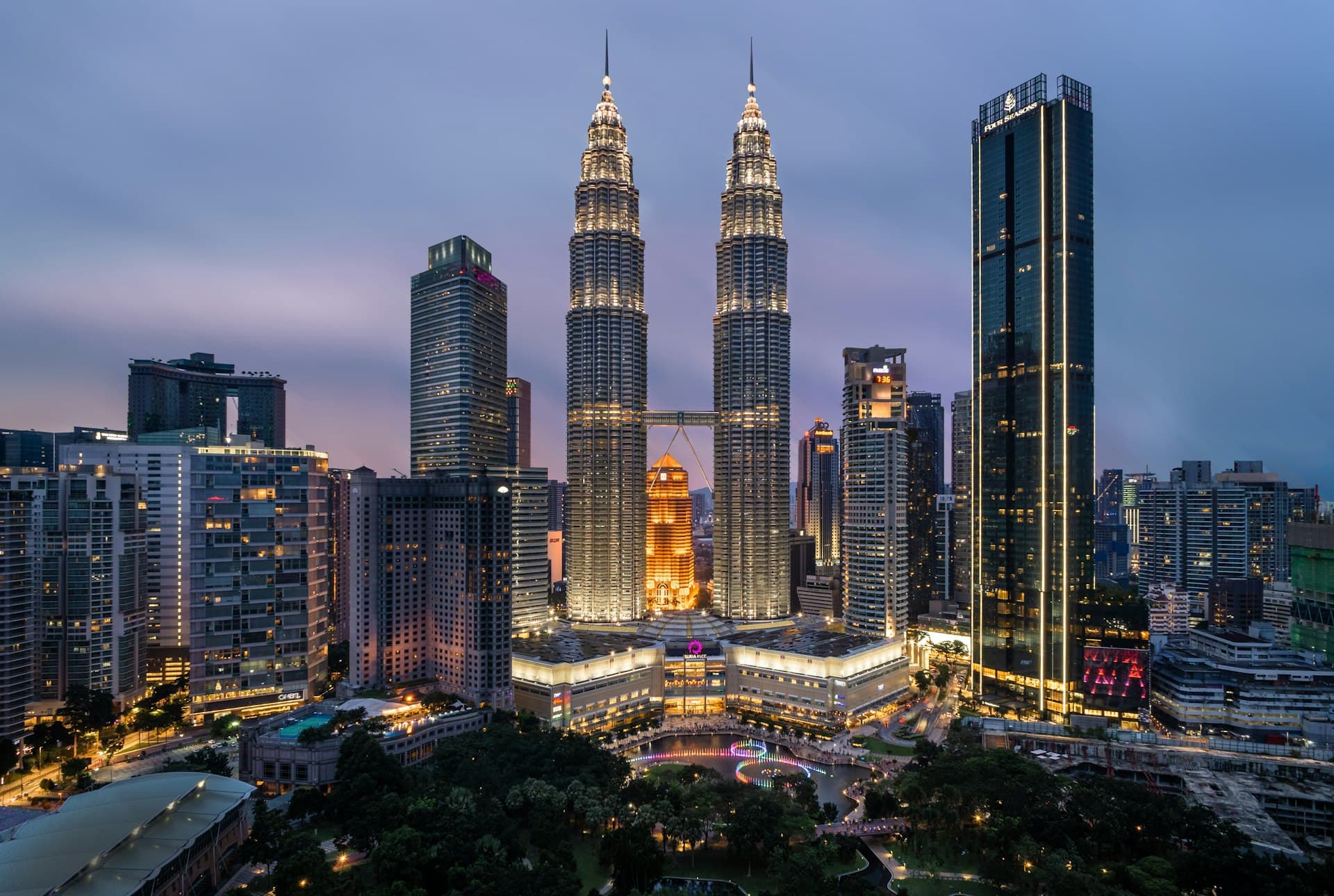

Serbia is one of the few European countries whose citizens need a visa for Malaysia. The eVisa is applied for entirely online from Belgrade — no embassy appointment — and grants a 30-day stay on arrival.
30 days
Maximum stay per visit
90 days
eVisa validity from approval
3–7 days
Typical processing time
Any port
Entry point accepted
100% online
No embassy visit
Important for Serbian citizens
Most European passports enter Malaysia visa-free for up to 90 days. Serbia is an exception: a visa is required before you board. If you have travelled to Malaysia with EU friends or colleagues who needed nothing, that is why their experience does not apply to your passport.
Overview
Serbia's connection to Malaysia is longer than most Serbian travellers realise. Both countries were founding forces in the Non-Aligned Movement — Tito and Tunku Abdul Rahman were contemporaries in that project — and the diplomatic relationship dates back to the early 1960s. Today the practical links are trade, engineering and a small but steady flow of Serbian professionals and tourists heading east.
For Serbian travellers, Malaysia is one of the better-value long-haul options in Asia. It is cheaper than Japan or Singapore, easier than India, and reachable on a single connection through Istanbul, Doha or Dubai from Belgrade. Kuala Lumpur, Penang and Langkawi make a natural two-week route, and the cost of a fortnight there compares favourably with a summer on the Adriatic.
The one thing that trips Serbian travellers up is the visa itself. Almost every European nationality — the entire EU, the UK, Switzerland, Norway, and Bosnia, North Macedonia and Albania besides — enters Malaysia visa-free for up to 90 days. Serbia is not on that list, so an approved eVisa is needed before boarding. It is a straightforward online application, but it must be done before you fly and it is easy to assume it does not apply.
At a glance
Eligibility
Yes — Serbian citizens need a visa to enter Malaysia. This is the point most Serbian travellers get wrong, because the great majority of European passports enter visa-free for up to 90 days and Serbian travellers reasonably assume the same applies. It does not. An approved visa must be in place before you board, and airlines at Belgrade Nikola Tesla will not check you in without one.
For tourism, visiting family and business travel, the eVisa is the route. The Single Entry Tourist eVisa fits a normal holiday; the Business eVisa covers meetings, conferences and trade fairs with an invitation from the Malaysian company; the Multiple Entry eVisa suits itineraries entering Malaysia more than once.
The multiple-entry question matters here because of how Serbian travellers usually structure the trip. A long-haul flight from Belgrade is rarely made for Malaysia alone — most itineraries add Singapore, Bangkok or Bali. If the route comes back through Kuala Lumpur, that second arrival is a fresh entry and a Single Entry eVisa will not cover it.
Check your transit country separately. Every route from Serbia connects, usually in Istanbul, Doha, Dubai, Abu Dhabi or Vienna, and a Malaysian eVisa confers nothing there. Serbian passport holders are visa-free or have straightforward transit arrangements at most of these hubs, but confirm it for your specific routing, particularly if you have separate tickets and must collect baggage.
Every traveller needs their own eVisa, including babies and children, each tied to that person's own Serbian passport. A child cannot be added to a parent's application.
Which one to choose
Three products, all applied for the same way online. The right one depends on how many times you intend to enter Malaysia and why you are going.
A one-off holiday, a family visit, or a first trip to Malaysia.
Regional itineraries that dip in and out of Malaysia, and frequent visitors.
Meetings, conferences, trade fairs and site visits. Not valid for paid work.
Stay & validity
A Single Entry Tourist eVisa is valid for 90 days from approval, which is the deadline by which you must arrive in Malaysia. The stay it grants once you enter is separate and shorter — up to 30 days, stamped in your passport at the counter. Do not read the first number as the second.
That 30-day limit is worth planning around deliberately. Serbian travellers making a long-haul trip often want three or four weeks, which fits comfortably; those planning a longer stay through the European winter do not. Malaysia's eVisa is a short-visit product and cannot be stretched.
The Multiple Entry eVisa runs for three or six months from approval with unlimited entries, each visit capped at 30 days. For a South-East Asian itinerary built around Kuala Lumpur as a hub, this is usually the right choice rather than the single-entry product.
Your Serbian passport must have at least six months of validity from your arrival date and at least one blank page. The eVisa attaches to the passport number and does not transfer to a renewed document — a reissued passport means applying again at full cost.
The eVisa cannot be extended once issued, and overstaying carries compound fines charged per day escalating to detention, deportation at your own cost and a re-entry ban. Read the date written on your entry stamp before leaving the immigration counter.
Pricing
Live fees for Serbian passport holders, shown all-in — the Malaysian government charge and our service fee together, with nothing added later.
Your nationality is pre-selected as Serbia
Requirements
Everything Serbian passport holders need before starting an application. The first five items apply to every applicant; the rest are specific to your nationality.
Passport bio-data page — a clear colour scan showing your photograph, full name, date of birth, passport number and expiry date, with at least six months of validity remaining
Recent passport-style photograph — white background, full face visible, taken within the last six months, with no headwear other than for religious reasons
Confirmed return or onward flight ticket showing you will leave Malaysia within the permitted stay
Proof of accommodation for the whole of your visit — hotel bookings, or an invitation letter and address if you are staying with family or friends
A credit or debit card to pay the Malaysian government fee and our service fee together, plus an email address you can access while travelling
Simple process
Four steps, entirely online, with our team checking every field before anything reaches Malaysian Immigration.
Enter your passport details exactly as printed, choose your visa type and upload your photograph and supporting documents. Most applicants finish in under fifteen minutes.
Our team checks your photograph, passport number, name spelling, itinerary and supporting documents against Malaysian Immigration requirements before anything is submitted.
Your application goes to the Department of Immigration Malaysia with the government fee paid, and we track its status until a decision is issued.
The approved eVisa is emailed to you as a PDF. Print a copy and keep it with your passport — airlines and immigration officers both ask to see it.
Malaysia eVisa applications from Serbia are typically decided within three to seven working days. Volumes are low and applications from the market are usually well documented, so most are approved without a query.
Apply at least two to three weeks before travelling. The extra week over the minimum is worth it because long-haul tickets from Belgrade are usually bought on non-refundable fares months ahead, and the cost of a delay is disproportionate to the cost of applying early.
Sort the transit question at the same time. Every route from Serbia connects through a third country, and a Malaysian eVisa gives you nothing there. Separate tickets that require collecting and re-checking baggage mean formally entering the transit country, which has its own rules.
Serbia is six hours behind Malaysia in winter and five during European summer time, so a query raised in Kuala Lumpur during their working day arrives in your early morning. Practically, that means you get a full working day to respond — check the email address on the application, spam folder included.
On arrival
An approved eVisa gets you on the plane. This is what happens once you land — including the arrival card that catches out more travellers than the visa itself.
Every traveller must submit the MDAC online within three days before arrival. It is not part of the eVisa, it is not optional, and airlines increasingly check it at the gate. It takes a couple of minutes and must be done for each traveller individually.
Malaysia issues the eVisa as a PDF rather than attaching it to the passport chip. Airline staff at check-in and the immigration officer on arrival both ask to see it, so carry a printed copy as well as the file on your phone.
The automated gates at KLIA are for Malaysian citizens, residents and a small number of registered categories. Visitors arriving on an eVisa are seen at a staffed counter, where the passport is stamped with the date of entry.
The officer may ask where you are staying, how long you intend to remain and how the trip is funded. Having your hotel booking, return ticket and, if you are visiting family, their address to hand makes this a thirty-second conversation.
Flying from Kuala Lumpur to Kota Kinabalu or Kuching means passing through immigration again on arrival, even though it is a domestic flight. Your eVisa covers it, but keep your passport accessible rather than packed.
The stamp records the date you entered and the date by which you must leave. Overstaying in Malaysia carries fines, detention and a re-entry ban, and the stamp is the only record of your deadline — so read it while you are still at the counter.
Getting there
There is no direct service between Serbia and Malaysia, so every journey connects. Turkish Airlines via Istanbul is usually the shortest total journey from Belgrade; Qatar Airways via Doha and Emirates via Dubai offer strong alternatives, and Air Serbia's own long-haul network can be combined with a regional feed. Total travel time is typically 15 to 18 hours.
Best time to go
Malaysia is tropical and humid year-round at roughly 25°C to 33°C, which is a substantial change from Serbia's continental climate in any season. The humidity rather than the temperature is what Serbian visitors notice — a 32°C day in Kuala Lumpur feels very different from a 32°C day in Belgrade.
December to March is the strongest window. It is the driest period on the west coast where Kuala Lumpur, Penang and Langkawi sit, and it coincides with the Serbian winter, which is exactly when a tropical two-week trip is most appealing. Fares out of Belgrade are also lower outside the European summer.
July and August work well in Malaysia but are the peak outbound period from Serbia, so expect higher fares on the connecting legs. If you can travel in May, June or September instead, you get similar conditions in Malaysia at a materially lower cost.
The east coast islands — the Perhentians, Redang and Tioman — close under the monsoon from November to February, which is precisely the European winter window. If beaches are the point of the trip, plan for Langkawi and the west coast in those months, or shift to between March and September for the east coast and Sabah.
Avoid these
Most refusals are avoidable and technical rather than substantive. These are the problems that come up most often on applications from Serbia — we check for every one of them before submitting.
The EU, the UK, Switzerland, Norway and most of the Western Balkans enter Malaysia without a visa for up to 90 days. Serbia does not. Travellers who ask a friend or check a general 'Europe' guide reach the wrong answer, and find out at Belgrade check-in when there is no time to fix it.
The eVisa's 90-day validity is your deadline to arrive in Malaysia, not the length of your stay. The stay granted at the counter is up to 30 days. This is a particularly costly misreading for long-haul travellers who planned a six-week trip around it.
A long flight from Belgrade is rarely made for Malaysia alone. If your route continues to Singapore, Bangkok or Bali and comes back through Kuala Lumpur, that return is a fresh entry. Book the Multiple Entry eVisa rather than discovering the problem at a regional border.
Every route connects through Istanbul, Doha, Dubai, Abu Dhabi or a European hub, and a Malaysian eVisa confers nothing there. Confirm the rules for your specific routing, particularly if separate tickets require you to collect baggage and re-check it.
Serbian travellers usually book Asia months ahead on restrictive fares. Approval is routine for this market but not instant, and rebooking a two-carrier long-haul itinerary is expensive. Apply first, then commit.
The MDAC is separate from the eVisa and required for every traveller, submitted online within three days before arrival. Complete it before you leave your transit airport — connecting airlines increasingly check it at the gate.
Passport number mistyped
By far the most common problem. The eVisa attaches to the number you enter, so a single wrong character produces an approval that does not match the document you present at check-in.
Insufficient proof of funds
Malaysian Immigration wants to see that you can support yourself for the whole visit. Thin statements, a balance deposited in a lump sum days before applying, or no statements at all are the leading cause of refusal.
A photograph that fails the check
Shadows across the face, a coloured or patterned background, glasses, or a scan cropped too tightly all cause rejection. Malaysia is stricter than most on the plain white background requirement.
Conditions
These conditions are set by the Department of Immigration Malaysia and do not vary by nationality. The 90-day validity and the 30-day stay are different things, and confusing them is the most common misreading of the whole scheme.
Your approval is issued against the passport number you enter. If you renew or replace that passport before travelling, the eVisa does not transfer — you must apply again on the new document, and there is no refund on the old one.
Every person travelling needs their own eVisa, including babies and children. A child cannot be added to a parent's application, and each traveller needs their own valid passport to apply against.
A Single Entry eVisa is valid for 90 days from the date it is approved, and that is the window in which you must arrive. The stay it grants once you enter is separate and shorter — up to 30 days. The two are routinely confused.
The Malaysia eVisa is not extendable. If you want to stay longer you must leave the country and apply again from outside. Building an extension into your plans is not an option, so book the trip you actually intend to take.
Unlike India's eVisa, Malaysia's is not restricted to designated airports. You may enter through any authorised international airport, seaport or land checkpoint, which makes overland arrivals from Thailand and Singapore straightforward.
An approved eVisa gets you on the plane. The decision to admit you is made by the immigration officer on arrival, who can ask about your funds, your accommodation, your onward ticket and the purpose of your visit.
Consular services
Malaysia maintains a resident embassy in Belgrade, a legacy of the two countries' long relationship through the Non-Aligned Movement. It plays no part in issuing an eVisa — the application is completed online and decided digitally, with no interview, no appointment and no passport submission. The embassy handles consular assistance, employment and student pass matters, and the cases where a visitor visa is not the appropriate route.
FAQs
The questions Serbian passport holders ask most often about travelling to Malaysia.
Yes. Serbia is one of the few European countries on Malaysia's visa-required list, so an approved visa is needed before you board. This surprises most Serbian travellers, because the EU, the UK, Switzerland, Norway and most of the Western Balkans all enter visa-free for up to 90 days.
Malaysia's visa-free list is decided country by country rather than by region, and Serbia is not currently on it. There is no practical workaround — an approved eVisa must be in place before departure, and airlines at Belgrade will not check you in without one.
Up to 30 days per entry, stamped in your passport on arrival. The eVisa's 90-day validity is the deadline by which you must arrive, not the length of your stay. The 30 days cannot be extended from inside Malaysia — to stay longer you must leave and apply again.
Typically three to seven working days. Volumes from Serbia are low and applications are usually well documented, so most are approved without a query. Apply two to three weeks ahead, since long-haul tickets from Belgrade are usually non-refundable.
No. Every route connects, most commonly through Istanbul with Turkish Airlines, Doha with Qatar Airways or Dubai with Emirates. Total journey time from Belgrade is around 15 to 18 hours, of which roughly 11 hours is the long leg into Kuala Lumpur.
That depends on the country you connect through rather than on Malaysia. Serbian passport holders have straightforward arrangements at most of the usual hubs, but confirm the rules for your specific routing — particularly if separate tickets mean collecting and re-checking baggage, which counts as entering that country.
Yes. The Multiple Entry eVisa is valid for three or six months from approval and allows unlimited entries, each capped at 30 days. It is usually the right choice for Serbian travellers, since a long-haul trip from Belgrade rarely covers Malaysia alone and often returns through Kuala Lumpur.
A passport valid six months beyond arrival, a confirmed return ticket, hotel bookings or an invitation letter, three months of bank or card statements, a white-background photograph and a travel itinerary. Business travellers also need an invitation from the Malaysian company.
Yes. Every traveller needs their own eVisa regardless of age, including babies, each tied to that person's own Serbian passport. A child cannot be added to a parent's application.
Yes. The MDAC is a separate online form submitted within the three days before you arrive, and the eVisa does not cover it. Each traveller submits their own, including children. Complete it before leaving your transit airport, as connecting airlines increasingly check it at the gate.
Your nationality is already set to Serbia. Complete the form in under fifteen minutes, and our team will check every detail before it reaches Malaysian Immigration.
Other nationalities
Requirements, supporting documents and routes differ by passport. Here are the guides for other eligible nationalities.