


Sri Lankan passport holders need a Malaysia eVisa approved before departure. Three and a half hours from Colombo, applied for entirely online, with a 30-day stay on arrival — here is what to prepare and how long to allow.
30 days
Maximum stay per visit
90 days
eVisa validity from approval
3–7 days
Typical processing time
Any port
Entry point accepted
100% online
No embassy visit
Overview
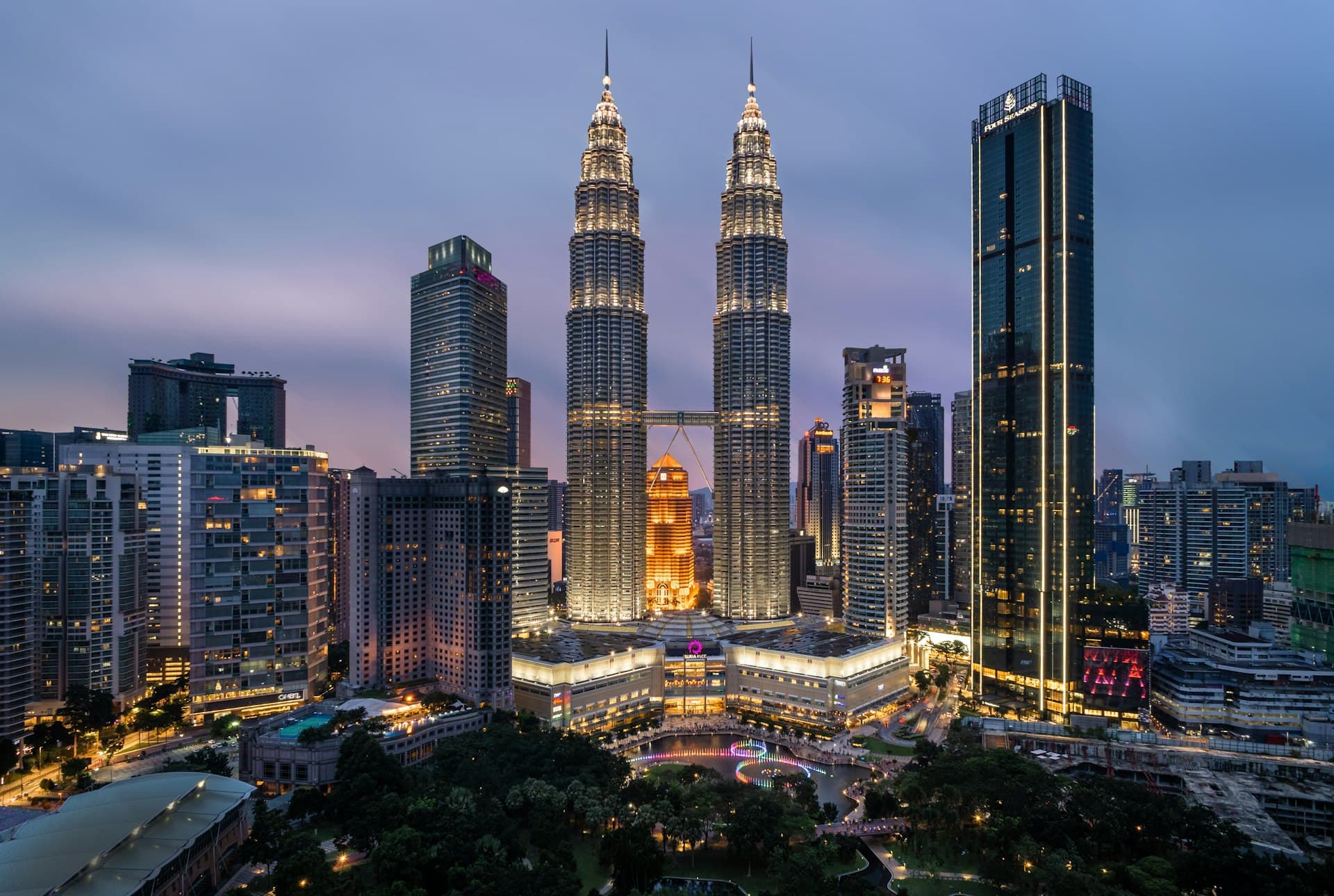
Kuala Lumpur is one of the closest international cities to Colombo, three and a half hours away and served several times a day. For Sri Lankan travellers Malaysia works as a short holiday, a shopping trip, a medical destination and a regional business hub all at once, and the cultural overlap is real — a large Tamil-speaking population, Buddhist and Hindu temples alongside mosques, and a food culture that overlaps at almost every meal.
Sri Lanka is on Malaysia's visa-required list, so an approved eVisa is needed before boarding. The system replaced the embassy queue for tourist and business visits — the whole application is completed online from Colombo or anywhere else, documents are uploaded rather than lodged, and the approval arrives by email as a PDF.
Applications from Sri Lanka are assessed more closely than the regional average, with the financial evidence carrying most of the weight. That is not a comment on individual travellers; it reflects the historic use of the visitor route to reach the Malaysian labour market. A well-documented file for a genuine holiday is routinely approved — a thin one for the same trip is not.
At a glance
Eligibility
Yes — every Sri Lankan citizen needs a visa to enter Malaysia, for any purpose and any duration. There is no visa on arrival at Kuala Lumpur and no transit exemption that allows you to leave the airport. Airlines at Bandaranaike International will not board you without an approved visa.
For tourism, visiting family and business travel, the eVisa covers it. The Single Entry Tourist eVisa fits a normal holiday or family visit; the Business eVisa covers meetings, conferences and trade fairs, supported by an invitation from the Malaysian company; and the Multiple Entry eVisa suits itineraries that enter Malaysia more than once.
The multiple-entry question comes up often for Sri Lankan travellers, because Kuala Lumpur is a natural hub for onward travel to Bangkok, Singapore and Bali. If your route leaves Malaysia and comes back, that second arrival is a fresh entry and a Single Entry eVisa will not cover it.
Work and study are separate routes. Employment requires a Visit Pass (Temporary Employment) arranged by a licensed Malaysian employer before travel, and a course requires a Student Pass arranged through the institution and Education Malaysia Global Services. Neither can be converted from a tourist eVisa after arrival.
Every traveller needs their own eVisa, including babies and children, each tied to that person's own Sri Lankan passport. A child cannot be added to a parent's application.
Which one to choose
Three products, all applied for the same way online. The right one depends on how many times you intend to enter Malaysia and why you are going.
A one-off holiday, a family visit, or a first trip to Malaysia.
Regional itineraries that dip in and out of Malaysia, and frequent visitors.
Meetings, conferences, trade fairs and site visits. Not valid for paid work.
Stay & validity
A Single Entry Tourist eVisa is valid for 90 days from the date it is approved. That is the deadline by which you must arrive in Malaysia, not the length of your stay. On entry you are granted up to 30 days, written on the stamp in your passport.
The Multiple Entry eVisa runs for three or six months from approval with unlimited entries, each visit capped at 30 days. For Sri Lankan business travellers on regular Kuala Lumpur rotations, and for regional itineraries that pass through Malaysia twice, it removes the need to reapply for each leg.
Your Sri Lankan passport must have at least six months of validity from the date you arrive and at least one blank page for the stamp. The eVisa is tied to the passport number, so renewing the document invalidates the approval — there is no transfer and no refund. Check the expiry before applying rather than after.
The eVisa cannot be extended once issued. To stay longer than the 30 days granted on arrival you must leave Malaysia and apply again from outside. Nothing can be arranged at an immigration office inside the country.
Overstaying attracts compound fines charged per day, and beyond a short overstay leads to detention, deportation at your own cost and a blacklisting that blocks re-entry. Read the date on your entry stamp before you leave the counter — it is the only record of your deadline.
Pricing
Live fees for Sri Lankan passport holders, shown all-in — the Malaysian government charge and our service fee together, with nothing added later.
Your nationality is pre-selected as Sri Lanka
Requirements
Everything Sri Lankan passport holders need before starting an application. The first five items apply to every applicant; the rest are specific to your nationality.
Passport bio-data page — a clear colour scan showing your photograph, full name, date of birth, passport number and expiry date, with at least six months of validity remaining
Recent passport-style photograph — white background, full face visible, taken within the last six months, with no headwear other than for religious reasons
Confirmed return or onward flight ticket showing you will leave Malaysia within the permitted stay
Proof of accommodation for the whole of your visit — hotel bookings, or an invitation letter and address if you are staying with family or friends
A credit or debit card to pay the Malaysian government fee and our service fee together, plus an email address you can access while travelling
Applications from Sri Lanka are assessed more closely than average, and an incomplete file is the single biggest cause of refusal. Prepare these before you start.
Simple process
Four steps, entirely online, with our team checking every field before anything reaches Malaysian Immigration.
Enter your passport details exactly as printed, choose your visa type and upload your photograph and supporting documents. Most applicants finish in under fifteen minutes.
Our team checks your photograph, passport number, name spelling, itinerary and supporting documents against Malaysian Immigration requirements before anything is submitted.
Your application goes to the Department of Immigration Malaysia with the government fee paid, and we track its status until a decision is issued.
The approved eVisa is emailed to you as a PDF. Print a copy and keep it with your passport — airlines and immigration officers both ask to see it.
Malaysia eVisa applications from Sri Lanka usually take four to eight working days. Applications with a complete evidence file move through the faster end of that range; those that trigger a document request add several days while the query is answered and reassessed.
Apply two to three weeks before you travel. Colombo to Kuala Lumpur is a short enough hop that Sri Lankan travellers often book late, but the visa timeline does not shrink to match a three-day trip planned on a Tuesday. Give the process room to absorb a single query.
Have the financial evidence ready before you start. Bank statements need the bank's stamp, should cover a genuine three to six months, and should show a pattern consistent with the trip you are describing. This is the document that decides most Sri Lankan applications.
Sri Lanka is two and a half hours behind Malaysia, so a query raised during Malaysian working hours reaches you the same morning. Watch the email address on the application, including its spam folder, for the whole processing period — same-day responses rarely cost you the trip.
On arrival
An approved eVisa gets you on the plane. This is what happens once you land — including the arrival card that catches out more travellers than the visa itself.
Every traveller must submit the MDAC online within three days before arrival. It is not part of the eVisa, it is not optional, and airlines increasingly check it at the gate. It takes a couple of minutes and must be done for each traveller individually.
Malaysia issues the eVisa as a PDF rather than attaching it to the passport chip. Airline staff at check-in and the immigration officer on arrival both ask to see it, so carry a printed copy as well as the file on your phone.
The automated gates at KLIA are for Malaysian citizens, residents and a small number of registered categories. Visitors arriving on an eVisa are seen at a staffed counter, where the passport is stamped with the date of entry.
The officer may ask where you are staying, how long you intend to remain and how the trip is funded. Having your hotel booking, return ticket and, if you are visiting family, their address to hand makes this a thirty-second conversation.
Flying from Kuala Lumpur to Kota Kinabalu or Kuching means passing through immigration again on arrival, even though it is a domestic flight. Your eVisa covers it, but keep your passport accessible rather than packed.
The stamp records the date you entered and the date by which you must leave. Overstaying in Malaysia carries fines, detention and a re-entry ban, and the stamp is the only record of your deadline — so read it while you are still at the counter.
Getting there
Colombo is one of the shortest international routes into Kuala Lumpur, with Malaysia Airlines, AirAsia and Batik Air Malaysia between them offering multiple daily departures. Low-cost competition keeps fares modest, and Kuala Lumpur's hub role makes it a natural connecting point onward to East Asia and Australia.
Best time to go
Malaysia's climate will feel entirely familiar to Sri Lankan travellers — tropical, humid, roughly 25°C to 33°C in every month. As at home, the variable is rain and it is regional. The west coast, where Kuala Lumpur, Penang and Langkawi sit, is driest from December to March; the east coast islands close under the monsoon from November to February.
December to March is the strongest window, combining the driest weather on the main tourist circuit with the busy but pleasant Sri Lankan holiday season for travel. July and August also work and avoid the Malaysian school peak.
Fares from Colombo climb around the April Sinhala and Tamil New Year and the December holidays, both of which are peak outbound periods. April in particular sees a rush of family travel — if your dates are flexible, the weeks just before or after are noticeably cheaper.
Two Malaysian dates are worth knowing. Thaipusam at Batu Caves, usually in late January or February, is one of the largest Hindu festivals outside India and draws Sri Lankan Tamil pilgrims specifically — book accommodation early if you want to attend. Hari Raya Aidilfitri at the end of Ramadan empties the cities and fills domestic transport for several days.
Avoid these
Most refusals are avoidable and technical rather than substantive. These are the problems that come up most often on applications from Sri Lanka — we check for every one of them before submitting.
The leading refusal cause for Sri Lankan applications. A large sum credited days before applying, on an otherwise quiet account, reads as arranged for the visa. Malaysian Immigration examines the pattern across three to six months rather than the closing balance.
Colombo to Kuala Lumpur is three and a half hours, which tempts travellers to plan the whole trip in a week. The visa does not compress to match — allow two to three weeks so a document query does not cost you a non-refundable ticket.
Kuala Lumpur is a natural hub onward to Bangkok, Singapore and Bali, and re-entering Malaysia on the way home is a fresh entry. A Single Entry eVisa is exhausted the first time you arrive. Itineraries that come back through Malaysia need the Multiple Entry product.
A letter with no landline, no company address and no named signatory invites a verification call that fails, which is worse than no letter at all. Small employers should attach business registration documents alongside.
The eVisa's 90-day validity is the window in which you must arrive. The stay granted at the counter is up to 30 days. Reading the first number as the second is the most common route to an accidental overstay.
The MDAC is separate from the eVisa and required for every traveller, submitted online within three days before arrival. An approved eVisa does not cover it, and airlines at Colombo increasingly check it at the gate.
Passport number mistyped
By far the most common problem. The eVisa attaches to the number you enter, so a single wrong character produces an approval that does not match the document you present at check-in.
Insufficient proof of funds
Malaysian Immigration wants to see that you can support yourself for the whole visit. Thin statements, a balance deposited in a lump sum days before applying, or no statements at all are the leading cause of refusal.
A photograph that fails the check
Shadows across the face, a coloured or patterned background, glasses, or a scan cropped too tightly all cause rejection. Malaysia is stricter than most on the plain white background requirement.
Conditions
These conditions are set by the Department of Immigration Malaysia and do not vary by nationality. The 90-day validity and the 30-day stay are different things, and confusing them is the most common misreading of the whole scheme.
Your approval is issued against the passport number you enter. If you renew or replace that passport before travelling, the eVisa does not transfer — you must apply again on the new document, and there is no refund on the old one.
Every person travelling needs their own eVisa, including babies and children. A child cannot be added to a parent's application, and each traveller needs their own valid passport to apply against.
A Single Entry eVisa is valid for 90 days from the date it is approved, and that is the window in which you must arrive. The stay it grants once you enter is separate and shorter — up to 30 days. The two are routinely confused.
The Malaysia eVisa is not extendable. If you want to stay longer you must leave the country and apply again from outside. Building an extension into your plans is not an option, so book the trip you actually intend to take.
Unlike India's eVisa, Malaysia's is not restricted to designated airports. You may enter through any authorised international airport, seaport or land checkpoint, which makes overland arrivals from Thailand and Singapore straightforward.
An approved eVisa gets you on the plane. The decision to admit you is made by the immigration officer on arrival, who can ask about your funds, your accommodation, your onward ticket and the purpose of your visit.
Consular services
As a fellow Commonwealth member, Sri Lanka hosts a Malaysian High Commission rather than an embassy. It plays no part in issuing an eVisa — the application is completed online and decided digitally, with no interview, no appointment and no passport submission. The High Commission handles consular assistance, employment and student pass matters, and the cases where a visitor visa is not the appropriate route.
FAQs
The questions Sri Lankan passport holders ask most often about travelling to Malaysia.
Yes. Sri Lanka is on Malaysia's visa-required list, so an approved visa is needed before boarding, whatever the purpose or length of the visit. For tourism, family visits and business trips the eVisa is applied for entirely online, with documents uploaded rather than lodged at the High Commission.
No. There is no visa on arrival for Sri Lankan nationals at Malaysian airports, and no transit exemption that allows you to leave the airport. The eVisa must be approved before you fly — airlines at Colombo will not check you in without it.
Usually four to eight working days. A complete evidence file moves through the faster end of that range, while a document request adds several days. Apply two to three weeks before travel so a single query does not cost you the trip.
Up to 30 days per entry, stamped in your passport on arrival. The eVisa's 90-day validity is the deadline by which you must arrive, not the length of your stay. The 30 days cannot be extended from inside Malaysia — to stay longer you must leave and apply again.
Malaysia publishes no fixed figure, but the account should comfortably cover the trip and show consistent activity across three to six months. The pattern matters more than the number — a large deposit made shortly before applying is a recognised refusal trigger.
Yes. The Multiple Entry eVisa is valid for three or six months from approval and allows unlimited entries, each capped at 30 days. It is the right choice for regional itineraries that pass through Kuala Lumpur more than once — for example continuing to Bangkok or Bali and returning through Malaysia.
Two to three weeks. The Colombo–Kuala Lumpur route is short enough that trips are often planned quickly, but the visa timeline does not compress to match. Applying early leaves room to answer a document request without rebooking flights.
Yes. Every traveller needs their own eVisa regardless of age, including babies, each tied to that person's own Sri Lankan passport. A child cannot be added to a parent's application. Include the birth certificate and, where only one parent travels, a consent letter from the other.
No. Employment requires a Visit Pass (Temporary Employment) arranged by a licensed Malaysian employer before travel, and study requires a Student Pass arranged through the institution and Education Malaysia Global Services. Neither can be converted from a tourist eVisa after you arrive.
Yes. The MDAC is a separate online form submitted within the three days before you arrive, and the eVisa does not cover it. Each traveller submits their own, including children, and airlines at Colombo increasingly check it at the boarding gate.
Your nationality is already set to Sri Lanka. Complete the form in under fifteen minutes, and our team will check every detail before it reaches Malaysian Immigration.
Other nationalities
Requirements, supporting documents and routes differ by passport. Here are the guides for other eligible nationalities.