
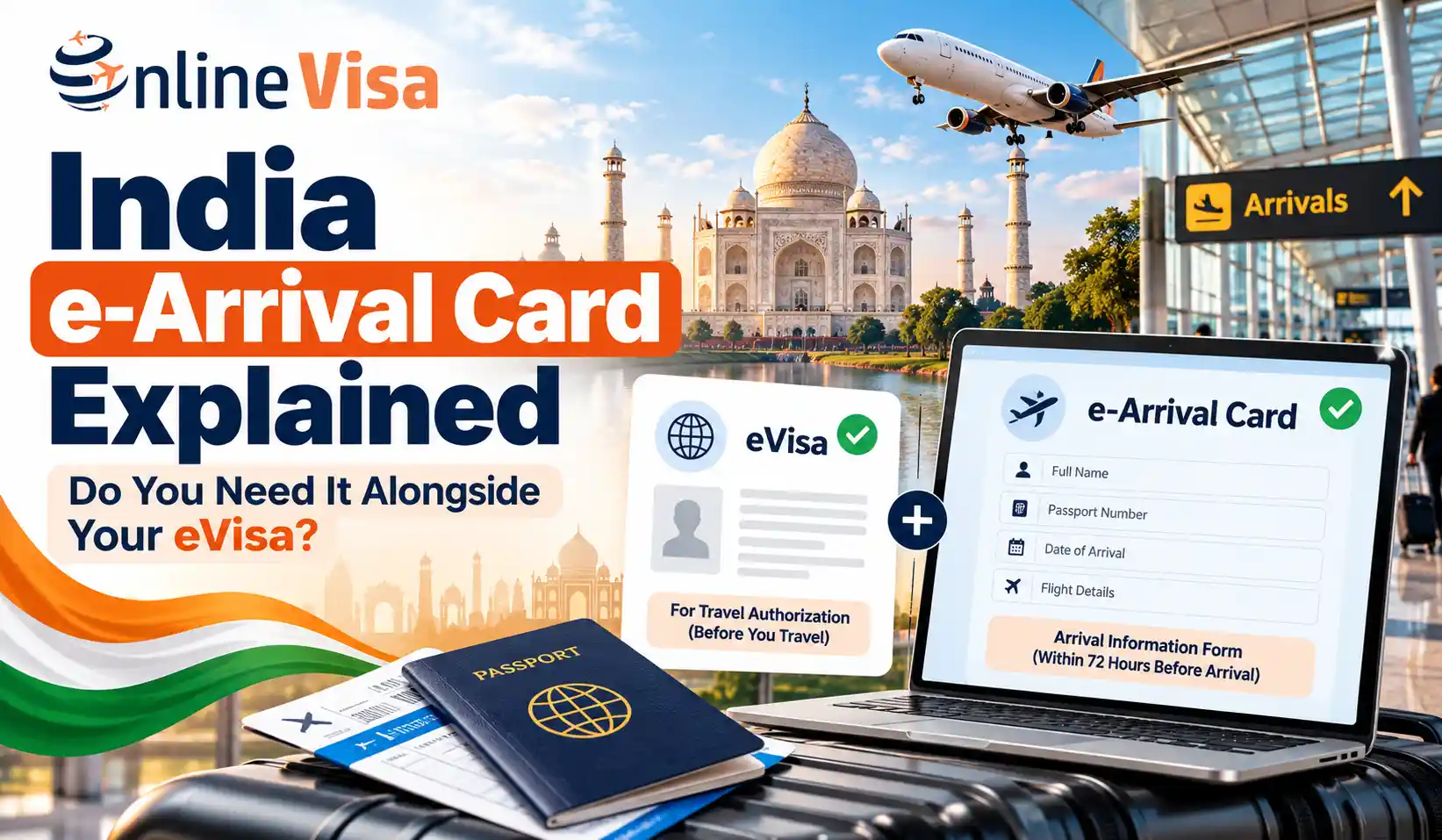
India e-Arrival Card Explained: Do You Need It Alongside Your eVisa?
India e-Arrival Card guide: learn when to submit it, how it differs from an eVisa, and what travelers need before arriving. Check now.
The two online requirements serve different purposes, and completing one does not replace the other. Here is a simple India e-Arrival Card guide to help you prepare for your trip in 2026.
India e-Arrival Card Guide: What Is It?
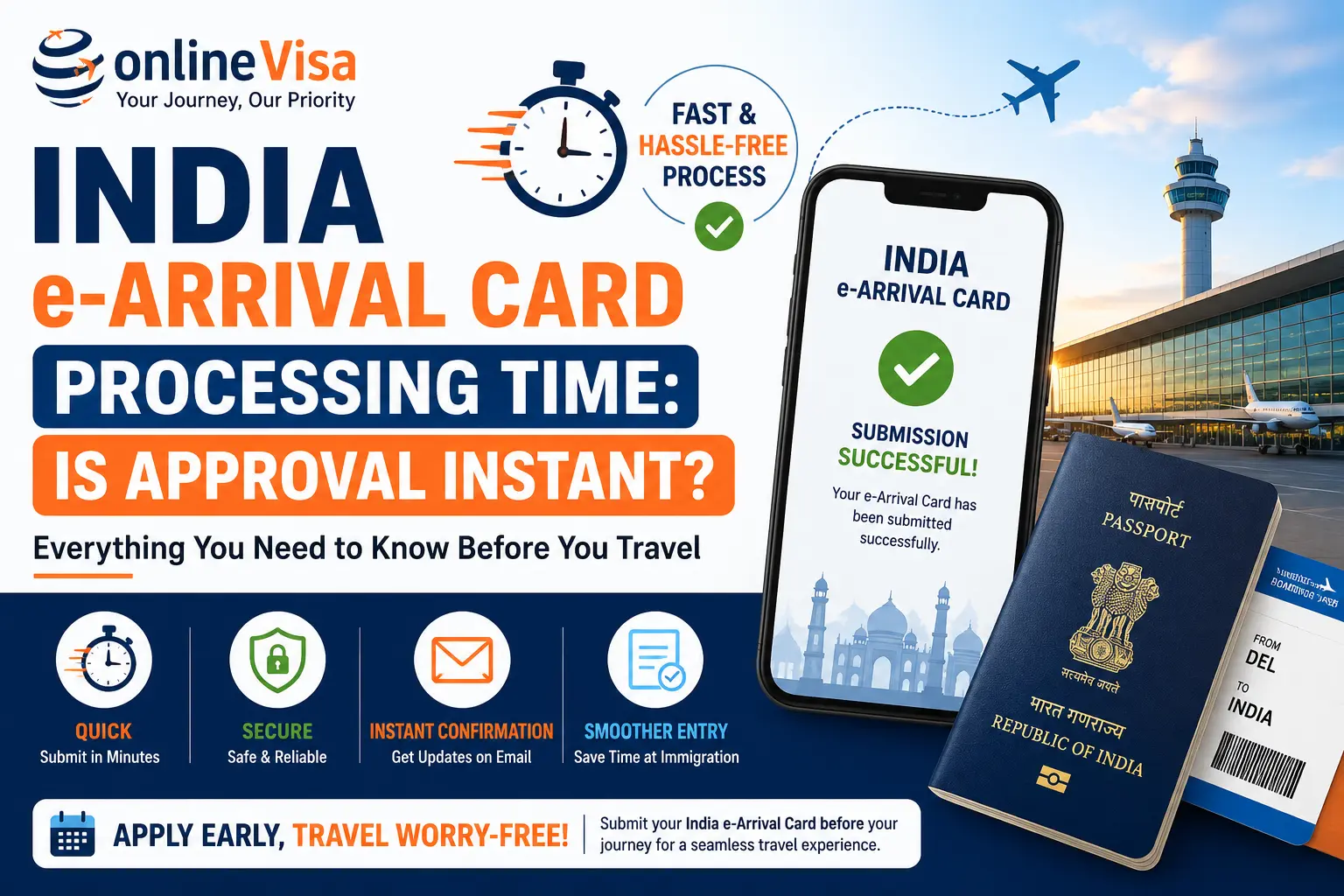
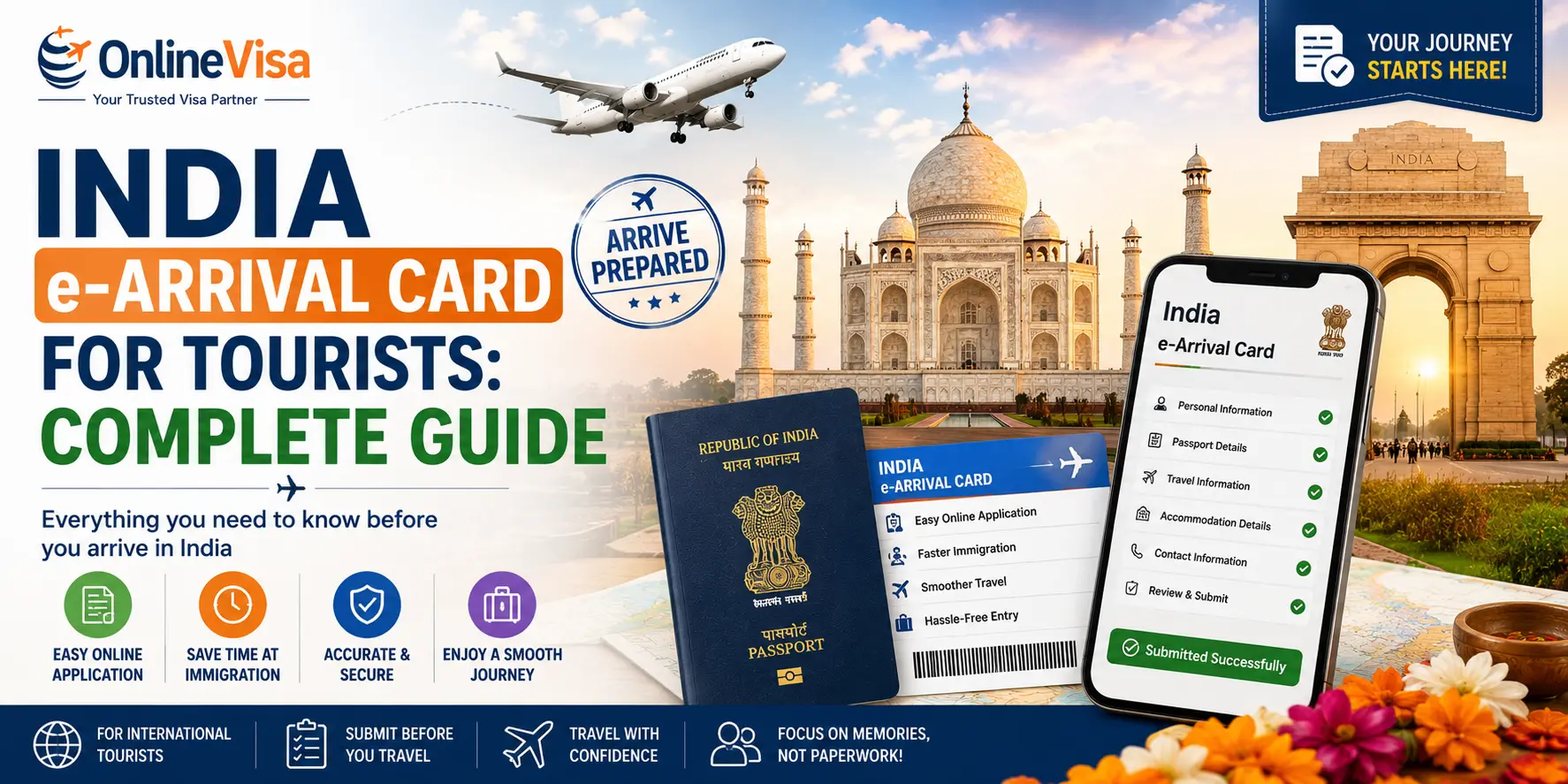
The India e-Arrival Card is an online arrival-information form for travelers entering India. It is not a visa and does not grant permission to enter India.
According to the Government of India, foreign nationals and OCI cardholders can complete and submit the e-Arrival Card online within 72 hours before arriving in India. It is available through official Indian government channels, including the Bureau of Immigration and the Indian Visa Su-Swagatam mobile app.
The important point is simple:
Your eVisa and e-Arrival Card are separate requirements.
If your nationality requires an Indian visa and you are traveling with an eVisa, you should still complete the required arrival information before reaching India.
Do You Need an e-Arrival Card With an Indian eVisa?
Yes. Having an Indian eVisa does not mean you can automatically skip the e-Arrival Card.
The Indian government's current portal states that foreign nationals and OCI/eOCI cardholders must complete and submit the e-Arrival Card. It also explains that the card is for arrival information rather than visa authorization.
Think of the process this way:
-
eVisa: Gives eligible travelers authorization to travel to India under the applicable visa category.
-
e-Arrival Card: Provides required arrival information before entering India.
-
Passport: Serves as your primary travel document.
-
Immigration: Your documents and biometric details are checked when you arrive.
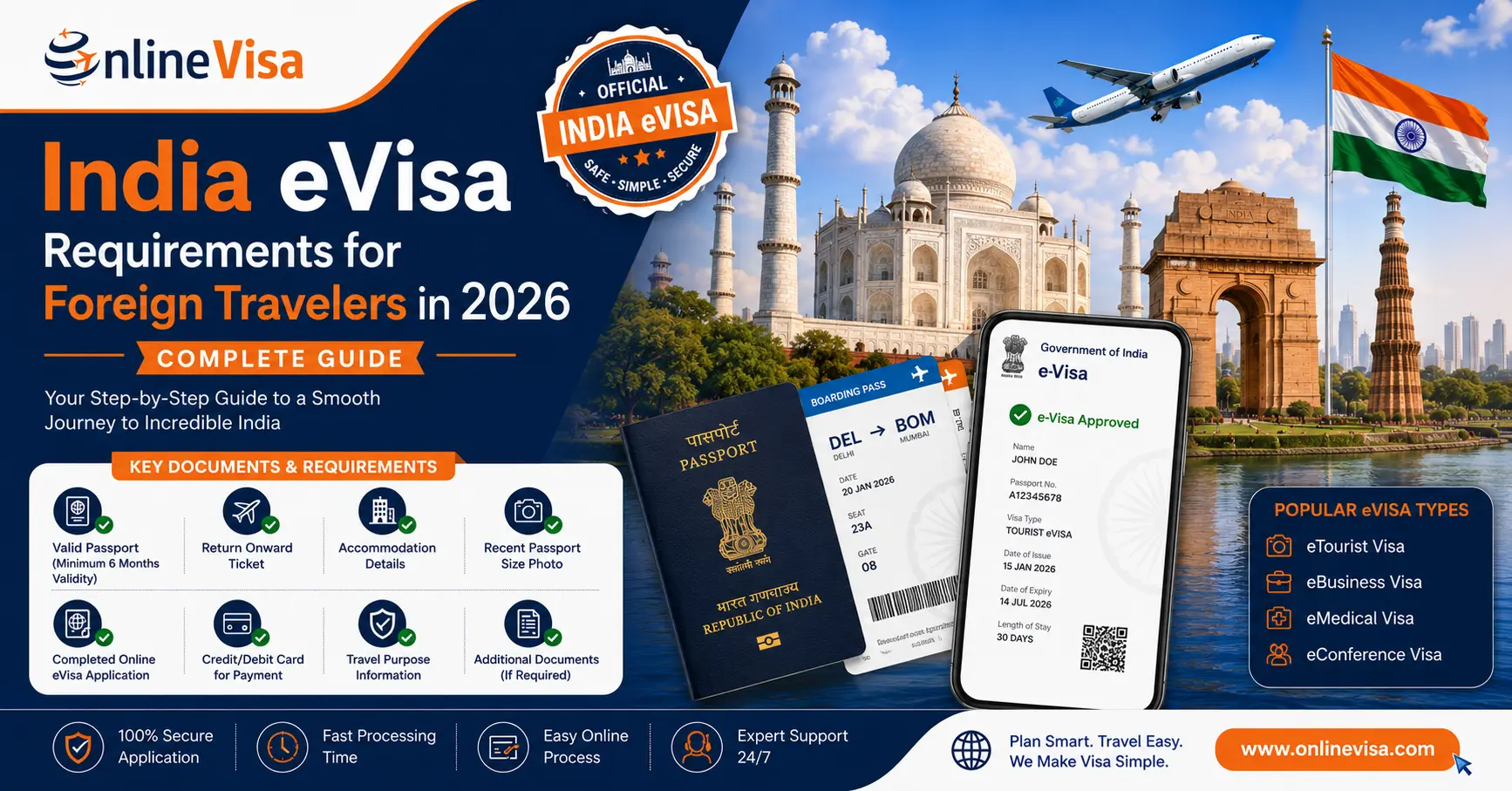
The eVisa application itself is also separate. India's official eVisa system requires applicants to apply online, pay the applicable fee and receive an Electronic Travel Authorization (ETA) by email.
eVisa vs e-Arrival Card: What's the Difference?
| Feature | Indian eVisa | India e-Arrival Card |
| Main purpose | Visa authorization | Arrival information |
| Is it a visa? | Yes | No |
| Who may need it? | Eligible foreign travelers | Foreign nationals and OCI cardholders, subject to applicable requirements |
| When to complete it? | Before travel according to visa rules | Within 72 hours before arrival |
| Does it replace the other? | No | No |
| Used for immigration? | Yes | Yes, as arrival information |
This distinction can prevent a common travel mistake: assuming that an approved eVisa completes every online requirement for arrival.
When Should You Complete the India e-Arrival Card?
The current Indian government guidance says the e-Arrival Card can be completed within 72 hours before arrival in India.
For example, imagine you are traveling from the USA and your flight is scheduled to arrive in Delhi on Friday afternoon.
You should plan to complete the e-Arrival Card during the 72-hour window before your arrival rather than trying to submit it weeks in advance.
A useful travel checklist is:
-
Confirm that your passport is valid.
-
Make sure your Indian eVisa has been granted, if required for your nationality.
-
Check your eVisa details carefully.
-
Complete the e-Arrival Card within the permitted 72-hour period.
-
Keep your travel documents and confirmation details accessible.
-
Follow any additional arrival instructions that apply to your journey.
What Information Is Needed?
The exact online form should be completed according to the information requested by the official Indian system at the time of submission.
Travelers should make sure that information entered online matches their passport and travel details.
Before submitting, carefully check details such as:
-
Full name
-
Passport information
-
Nationality
-
Travel information
-
Arrival details
-
Other information requested by the form
Avoid entering information from memory when your passport or travel documents are available. Small differences in names or document details can create unnecessary confusion during travel.
Example: Traveling to India From the USA
Suppose you are a US citizen planning a holiday in India.
You may need to complete two separate online processes:
First: Apply for and obtain the appropriate Indian eVisa if you are traveling under an eVisa category.
Second: Complete the India e-Arrival Card within 72 hours before arriving in India.
The second step does not replace the first.
For general information about India's visa options, you can review the India visa information page before preparing your travel documents.
Does the e-Arrival Card Cost Anything?
The Government of India states that it does not authorize agents or intermediaries to charge fees for the e-Arrival Card. The official Indian Visa Online portal also warns travelers about unauthorized charges for eVisa and e-Arrival Card services.
This is important when searching online.
If you use a private visa service provider for assistance with your travel documentation, check clearly what service fees are being charged and distinguish them from official government requirements.
The official government portal should be used to verify the latest requirements before travel.
Do You Still Need Your eVisa After Completing the Arrival Card?
Yes.
Submitting the e-Arrival Card does not turn into an Indian visa and does not replace your eVisa.
The official Indian eVisa system explains that travelers applying for an eVisa receive an Electronic Travel Authorization after the application process, and eligible travelers must present the required documentation at immigration.
Therefore, do not treat the e-Arrival Card as proof that you have permission to enter India.
Keep your:
-
Valid passport
-
Approved eVisa/ETA
-
e-Arrival Card submission details
-
Other required travel documents
available during your journey.
How to Prepare for Arrival in India
A few simple checks can make your arrival easier.
1. Check Your Passport
Use the same passport details that appear on your travel documents. The Indian eVisa system also provides specific passport-related requirements, so check the current rules for your visa category and nationality.
2. Check Your eVisa
Make sure your eVisa has been approved before traveling and that your intended arrival falls within its permitted validity period.
3. Complete the e-Arrival Card
Submit the arrival information within 72 hours before arriving in India, according to the current government guidance.
4. Keep Confirmation Details
Save relevant confirmations on your phone and, where practical, keep a backup accessible offline.
5. Check for Additional Requirements
Travel requirements can change depending on nationality, travel history, health requirements, visa category and other circumstances.
Always check the latest official information before departure.
Can a Visa Service Provider Help With the India Visa Process?
A private visa service provider can offer assistance with the application process, document preparation or general guidance.
However, travelers should understand the difference between a private service and an Indian government immigration authority.
The Indian government identifies its official eVisa portal separately and states that the eVisa process is online.
If you need assistance with an Indian visa application, you can visit the India visa application page and review the available service information before proceeding.
India e-Arrival Card Guide: Common Mistakes to Avoid
Before your flight, avoid these common mistakes:
-
Assuming an approved eVisa automatically completes the arrival-card requirement.
-
Waiting until after landing to check whether the e-Arrival Card was required.
-
Completing the form with passport information that does not match your documents.
-
Paying an unofficial fee for a government arrival form.
-
Relying on outdated travel information from old blog posts.
-
Forgetting to check requirements again shortly before departure.
A few minutes spent checking current requirements can help you avoid unnecessary confusion at the airport.
FAQ About India's e-Arrival Card
1. Is the India e-Arrival Card the same as an eVisa?
No. The e-Arrival Card is an arrival-information form, while an eVisa is a visa authorization. They serve different purposes.
2. Do eVisa holders need to complete the e-Arrival Card?
Foreign nationals and OCI cardholders are currently instructed to complete the e-Arrival Card within 72 hours before arrival. Having an eVisa does not itself replace this requirement.
3. When can I submit the India e-Arrival Card?
The current Indian government guidance says it can be completed and submitted online within 72 hours before your arrival in India.
4. Is the e-Arrival Card a visa?
No. The Indian government specifically describes it as arrival information rather than a visa. You must still have the appropriate travel authorization or visa where required.
Final Thoughts
The easiest way to remember the process is: eVisa and e-Arrival Card are two different steps.
If you need an Indian eVisa, complete the appropriate visa application first. Then, within 72 hours before arrival, complete the required e-Arrival Card using the current official Indian system.
For visa assistance, review your India visa options and make sure your documents are ready before your trip.
Ready to Apply?
Planning your India trip? Apply for your Indian visa now through the application page and check the latest requirements before you travel.