
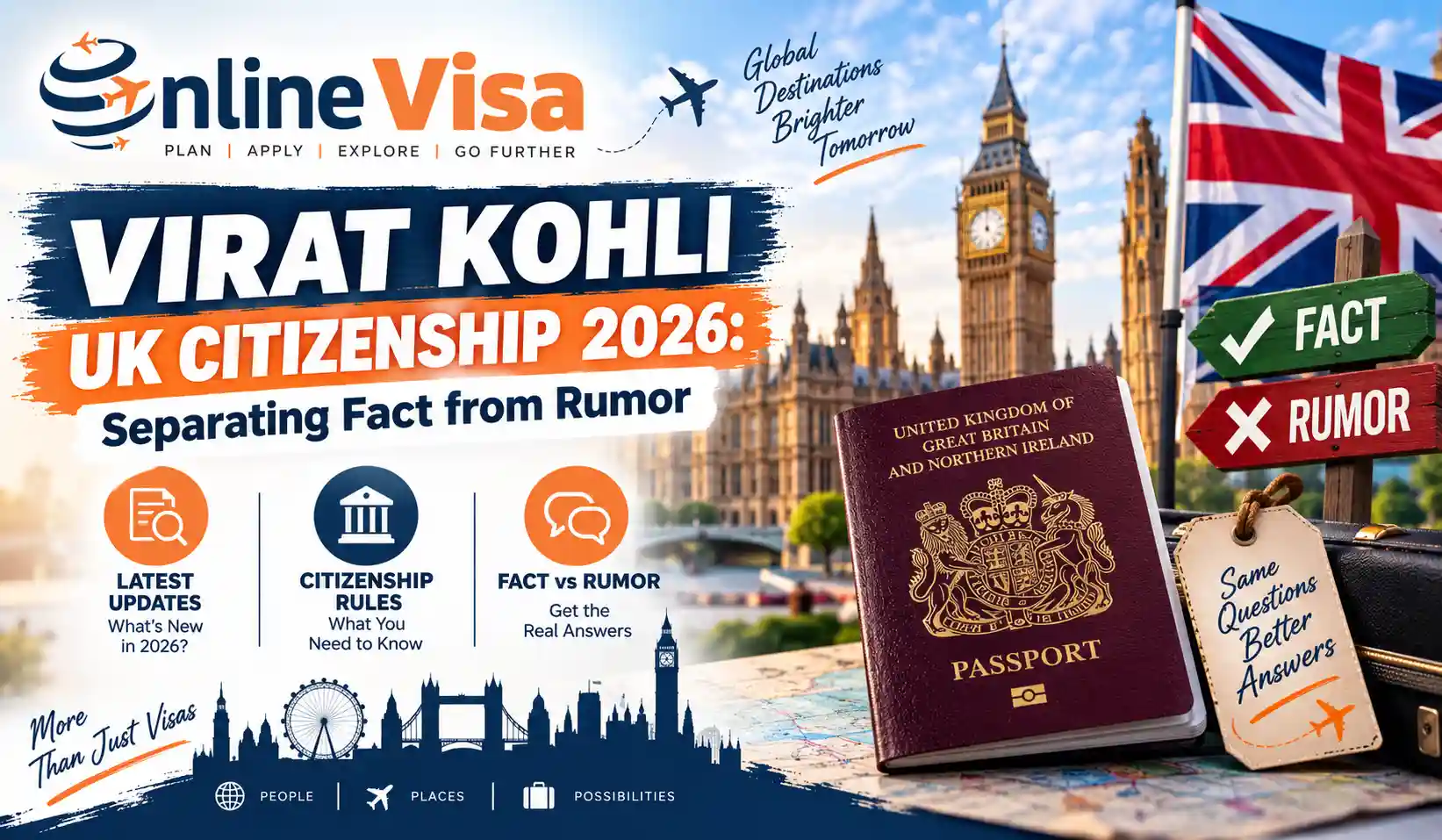
Virat Kohli UK Citizenship 2026: Separating Fact from Rumor
Is Virat Kohli a UK citizen? We break down what's actually true about his British citizenship status, his visa situation, and the real rules that govern the citizenship timeline.
Does Virat Kohli Actually Have UK Citizenship?
No verified evidence exists that Virat Kohli holds UK citizenship. Neither Kohli nor his wife Anushka Sharma has publicly confirmed applying for or receiving a British passport. The UK Home Office does not comment on individual cases, and claims tracing back to entertainment blogs lack any official confirmation from credible news sources or government bodies.
As of 2026, the straightforward answer is: we don't know his exact immigration status, and rumors don't change that fact. What we can do is explain how someone actually becomes a British citizen, and why it's far harder for a touring international athlete than most people think.
Where the UK Citizenship Rumor Started
The Virat Kohli UK citizenship story blends three separate facts into one misleading narrative:
- The family spends real time in London. Anushka's father, Dr. Sriram Nene, explained on a podcast that the couple chose London partly for privacy—raising children in India under that level of public scrutiny is extremely difficult. Living somewhere, however, is not citizenship. Millions of people hold long-term UK visas without a British passport.
- Assumptions about their son's birthplace. Kohli and Anushka announced on 27 February 2024 that their son was born on 15 February 2024, but they never stated where. Paparazzi sightings led press outlets to assume London, then further assume this triggered British citizenship eligibility—without checking the actual legal rules.
- The March 2026 chartered flights story. Reports claimed Kohli requested chartered flights to London during IPL 2026. He shared the story on Instagram with laughing emojis. The internet treated a joke as a clue.
Combine these three unrelated threads, and you get a rumor with the appearance of substance and none of the proof.
His Known Immigration History: The International Sportsperson Visa
What we do know: In 2018, Kohli entered the UK under the Tier 2 (Sportsperson) visa. That category no longer exists under that name—the UK folded it into the International Sportsperson visa in recent years.
Here's how the International Sportsperson visa works:
- Your sport's governing body must endorse you as internationally established.
- A UK employer or organization sponsors you.
- Each grant runs up to three years and can be renewed.
- After five years holding at least one grant longer than twelve months, you may become eligible for indefinite leave to remain (ILR)—the stepping stone to citizenship.
Beyond that historical detail, Kohli's current visa status remains private. Nobody outside the Home Office knows whether he holds an active International Sportsperson visa, a different visa category, or visitor permission. Anyone claiming otherwise is guessing.
The Real Path to British Citizenship (and Why It's Hard for Athletes)
British citizenship isn't handed out to famous residents. It's a two-stage climb: first, you get indefinite leave to remain (ILR), also called settled status. Then, you apply for naturalisation on top of it.
Stage One: Indefinite Leave to Remain
You typically need to live in the UK for five years on a qualifying visa before you can apply for ILR. Some visas (like the International Sportsperson visa) support this path; others don't.
Stage Two: Naturalisation to British Citizenship
Once you hold ILR, you must wait 12 months (waived if married to a British citizen) before you can naturalise. The full requirement list includes:
- Five years of UK residence in the five years before you apply.
- Maximum 450 days of absence across that entire five-year period.
- Maximum 90 days of absence in the final twelve months.
- Passing the Life in the UK Test.
- Proof of English, Welsh, or Scottish Gaelic language ability.
- A clean good-character record.
- The application fee (£1,709 as of April 2026), plus a citizenship ceremony fee (£130).
Why Professional Athletes Face a Real Barrier
Here's where the math breaks down for someone like Kohli: a touring international cricketer exceeds the absence limit in a single season.
In any twelve-month period, you can be absent from the UK for a maximum of 90 days. A professional cricketer playing the IPL, international tours, and ICC events easily surpasses this. Add travel days, tournaments in Australia, South Africa, and the Caribbean, and you're pushing 120+ days away per year—well over the legal limit.
For a settling athlete, this isn't a minor inconvenience. It's a structural obstacle. The absence rules are strict because they measure commitment to UK residence. A player based elsewhere for most of the year doesn't meet that standard, even if they own property and spend significant time in London.
Anushka Sharma's Citizenship Status
No public evidence suggests Anushka Sharma holds UK citizenship either. Like Kohli, she would need to satisfy the same five-year residency rule, absence limits, and naturalisation tests. If the family spends significant time in London for privacy and schooling, that may support a long-term visa strategy—but it doesn't bypass citizenship requirements.
Spouse status also matters: if one partner holds British citizenship, the other's path to naturalisation shortens (the 12-month ILR wait is waived), but the five-year residency clock still runs.
What About UK Visas for International Travel?
If Kohli, Anushka, or their family members need to travel internationally, they may also need additional travel authorizations depending on their destination. For instance, visitors to certain countries now require pre-travel clearance. If you're planning international cricket tours or family trips, apply for the UK ETA online now to ensure smooth entry and exit for future UK visits.
Frequently Asked Questions
Can someone born in the UK automatically become a British citizen?
Not always. If a child is born in the UK but neither parent is a British citizen or settled resident, the child doesn't automatically acquire citizenship. However, after ten years of continuous UK residence, they can apply for citizenship based on long-term residence. This is a common misconception tied to the Akaay birth-location rumors.
Does owning property in the UK help with citizenship?
No. Property ownership is separate from immigration status. You can own a home in London and still be on a visitor visa or a work visa. The Home Office doesn't weigh real estate when assessing residency for naturalisation—only your immigration status and physical presence on UK soil.
Could Kohli's family qualify for a different visa route?
Possibly. Beyond the International Sportsperson visa, routes like the Family visa or private wealth visa exist. However, none of these automatically lead to citizenship faster. Each has its own residence requirements before ILR becomes possible.
What happens if someone exceeds the absence limit?
Exceeding the 90-day absence limit in the final twelve months (or 450 days across the full five years) can result in a rejected naturalisation application. The Home Office takes this rule seriously because it measures genuine UK residence. Some people appeal based on exceptional circumstances, but sport tours are not automatically deemed exceptional.
How long does the full citizenship process take?
If you're starting from a work visa: typically five years minimum to reach ILR eligibility, plus another 12 months on top before you can apply for naturalisation. The Home Office then processes the naturalisation application (usually 6–12 months). Total: six to seven years in most cases. For married applicants to British citizens, it can be faster (around 2–3 years from ILR), but the five-year residence clock still applies upfront.
Key Takeaways
What's confirmed: Virat Kohli has no verified UK citizenship. His family spends time in London. He previously held an International Sportsperson visa. Beyond that, his immigration status is private.
What's rumor: Claims that he's applied for or received a British passport, or that his son's birth location triggered automatic citizenship eligibility.
The real barrier: Even if Kohli wanted to naturalise as a British citizen, his career schedule—IPL, international tours, ICC tournaments—would violate the strict absence limits required for settlement and naturalisation.
The broader lesson: British citizenship is earned through documented UK residency and subject to rigid absence rules. Fame, wealth, and property ownership don't override them. The process is the same for athletes, business owners, and everyone else.