
India Tourist Visa Rejection Reasons and Solutions
Learn the top India Tourist Visa rejection reasons in 2026 and discover practical solutions to avoid delays, improve approval chances, and apply successfully.
In most cases, visa refusals are not caused by ineligibility but by incorrect information, poor-quality documents, or incomplete applications. Understanding the most common India Tourist Visa rejection reasons can help you prepare a stronger application and improve your chances of approval.
Why Are India Tourist Visa Applications Rejected?
India receives millions of visa applications each year, and immigration authorities carefully review every submission to ensure it meets the country's entry requirements. Even a small mistake can delay processing or lead to rejection.
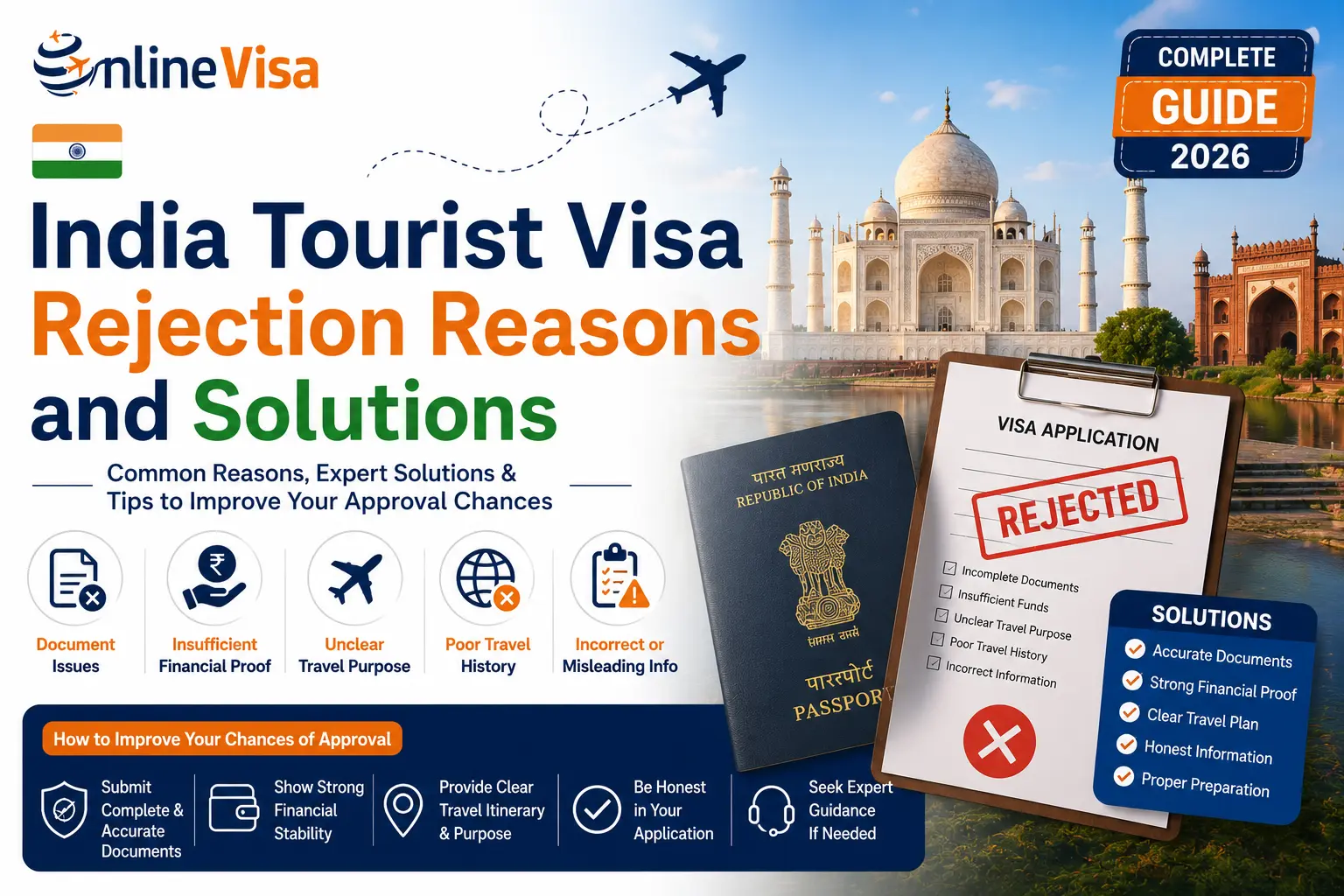
Applications are commonly refused because of:
- Incomplete information
- Incorrect passport details
- Poor-quality supporting documents
- Missing evidence
- Failure to meet visa requirements
The good news is that most of these issues are completely preventable with careful preparation.
1. Incorrect Passport Information
One of the leading causes of visa rejection is entering passport information incorrectly. Since immigration systems compare the details in your application with your passport, even a minor typing mistake can create problems.
Common errors include:
- Wrong passport number
- Incorrect issue or expiry date
- Misspelled names
Solution
Before submitting your application, compare every detail with your passport. Make sure your full name, passport number, and all dates match exactly as printed. Taking a few extra minutes to review this information can prevent unnecessary delays.
2. Passport Does Not Meet Validity Requirements
A passport that doesn't meet India's entry requirements may result in your application being refused. Travelers sometimes overlook passport validity until after submitting their application.
Problems usually occur when the passport:
- Has less than six months' validity remaining
- Is damaged
- Contains incomplete information
Solution
Ensure your passport remains valid for at least six months beyond your intended arrival date. It should also have sufficient blank pages and be in good physical condition. If your passport is close to expiring, renew it before you apply.
3. Poor-Quality Passport Photograph
Photograph-related errors are another common reason for India eVisa delays and rejections. A blurry or incorrectly formatted image may prevent immigration officers from verifying your identity.
Typical issues include:
- Blurry photographs
- Dark backgrounds
- Shadows on the face
- Incorrect dimensions
- Sunglasses or face coverings
Solution
Use a recent passport-style photograph that meets all official requirements. The image should have a plain white background, clearly show your face, and be high resolution. If possible, consider using a professional passport photo service to ensure compliance.
4. Unclear Passport Scan
Uploading a poor-quality passport scan can also delay processing. Immigration officers must be able to read every detail clearly.
Problems often include:
- Cropped images
- Low-resolution scans
- Missing passport information
- Glare or shadows
Solution
Upload a full-color scan of your passport's bio page. Before submitting your application, preview the file to confirm that every detail is clear, readable, and correctly oriented.
5. Incomplete Application Form
Leaving sections of the application blank is another common reason for rejection. Even if a missing detail appears unimportant, it may prevent immigration authorities from completing their review.
Examples include:
- Missing travel information
- Incomplete addresses
- Unanswered questions
- Missing contact details
Solution
Complete every section of the application carefully. Creating a simple checklist before submission can help ensure that no required information has been overlooked.
6. Inconsistent Information
Your application should present a consistent and accurate record of your travel plans. If information differs between documents, immigration officers may request additional verification or reject the application.
Examples include:
- Different spellings of your name
- Conflicting travel dates
- Incorrect nationality
- Mismatched passport information
Solution
Review all supporting documents together before submitting your application. Your passport, travel itinerary, accommodation details, and application form should all contain matching information.
7. Selecting the Wrong Visa Category
Choosing an incorrect visa category is a mistake that many first-time applicants make. Applying for the wrong type of visa may lead to unnecessary delays or rejection.
For example:
- Business travelers applying for a tourist visa
- Medical visitors selecting a tourist category
- Conference attendees choosing a standard tourist visa
Solution
Before you apply India visa online , carefully read the description of each visa category. Select the option that accurately reflects the purpose of your visit.
Common categories include:
- Tourist Visa
- Business Visa
- Medical Visa
- Conference Visa
8. Previous Immigration Violations
Previous immigration issues may result in additional scrutiny during the review process. This doesn't automatically mean your application will be rejected, but authorities may require more information.
Examples include:
- Previous visa overstays
- Deportations
- Entry refusals
- Immigration violations in another country
Solution
Always answer questions about your travel history honestly. Attempting to hide previous immigration issues can create more serious problems than the issue itself.
9. Criminal Record Concerns
Depending on the nature of the offense, applicants with serious criminal records may face additional security checks during visa processing.
Solution
Provide truthful information whenever requested. False declarations can lead to visa refusal and may affect future travel opportunities.
10. Suspicious Travel Patterns
Immigration authorities sometimes conduct additional reviews when an applicant's travel history appears unusual.
Examples include:
- Frequent unexplained international travel
- Contradictory travel purposes
- Inconsistent travel history
Solution
Ensure your itinerary and supporting documents clearly explain the purpose of your visit. Consistency between your travel plans and documentation helps build confidence in your application.
11. Insufficient Supporting Documentation
Supporting documents play an important role in demonstrating the purpose of your visit. Missing documents can slow processing or result in refusal.
You may be asked to provide:
- Return flight tickets
- Accommodation details
- Travel itinerary
- Additional supporting evidence
Solution
Gather all required documents before beginning your application. Having complete documentation makes it easier for immigration officers to verify your travel plans.
12. Errors in Uploaded Documents
Many applications are delayed because applicants accidentally upload the wrong documents or incomplete files.
Common mistakes include:
- Uploading the wrong passport page
- Submitting incomplete scans
- Uploading unrelated documents
Solution
Clearly label your files before uploading them and review every attachment carefully before final submission. A quick final review can help prevent avoidable mistakes.
How to Reduce the Risk of India Tourist Visa Rejection
Although no visa approval can ever be guaranteed, following a few best practices can significantly improve your chances.
Before submitting your application:
- Verify all information carefully.
- Upload high-quality photographs and document scans.
- Apply well before your intended travel date.
- Read every visa instruction carefully.
- Provide truthful and consistent information throughout your application.
These simple precautions can help reduce delays and improve the quality of your submission.
What Should You Do If Your India Tourist Visa Is Rejected?
Receiving a visa refusal can be disappointing, but it doesn't necessarily mean your travel plans have come to an end. Many applicants are successfully approved after correcting the issues that caused the original rejection.
If your application is refused:
- Review the reason for refusal.
- Correct any inaccurate information.
- Replace poor-quality documents.
- Prepare a stronger application.
- Reapply when you meet all requirements.
Learning from the initial application often leads to a much stronger resubmission.
Professional Application Review Can Help
Many visa refusals result from small mistakes that applicants simply don't notice. Having your application reviewed before submission can provide additional confidence and reduce the likelihood of avoidable errors.
A professional review can help:
- Detect application mistakes
- Verify supporting documents
- Confirm compliance with visa requirements
- Reduce the risk of rejection
For many travelers, a second review offers valuable peace of mind before applying.
Final Thoughts
Most India Tourist Visa rejections are entirely preventable. Incorrect passport details, poor-quality photographs, incomplete applications, and missing documents remain the most common reasons why travelers experience delays or refusals.
By understanding these India Tourist Visa rejection reasons and solutions, you can prepare a stronger application and significantly improve your chances of approval. Before you apply India visa online, take the time to verify every detail, review your documents carefully, and ensure your application is complete. A little extra preparation today can make the difference between a stressful experience and a smooth journey to India.