
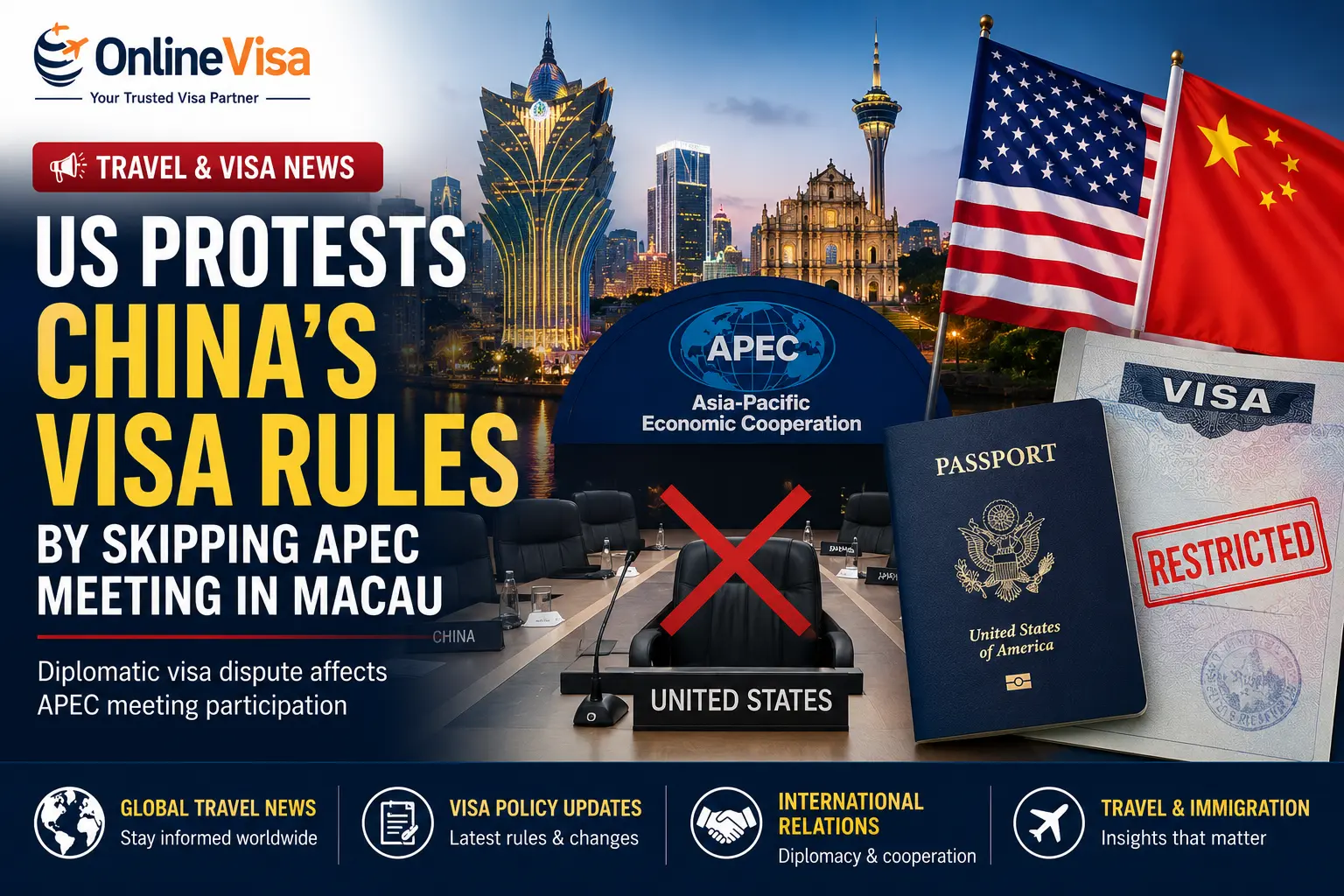
US Protests China's Visa Rules by Skipping APEC Meeting in Macau
The United States has reportedly skipped an APEC-related meeting in Macau over concerns regarding China's visa policies. Learn what this development means for international travel, diplomacy, and visa regulations.
According to recent reports, the United States chose not to participate in an Asia-Pacific Economic Cooperation (APEC) meeting in Macau after raising concerns over China's visa arrangements for certain members of the US delegation. While the issue primarily involves diplomatic relations, it also underscores how visa policies can impact government engagement, international conferences, and cross-border cooperation.
As countries continue to strengthen border security while encouraging international travel, visa regulations have become an increasingly important part of global policy. For travelers, businesses, and governments alike, understanding changing visa rules is essential in today's interconnected world.
What Happened Between the US and China?
Recent reports indicate that the United States declined to attend an APEC-related meeting held in Macau because of disagreements over visa access for members of its official delegation. The concern reportedly centered on entry permissions granted by Chinese authorities, prompting the US to withdraw its participation from the event.
Although discussions between the two countries continue through diplomatic channels, the incident has attracted international attention because it demonstrates how visa policies can extend beyond tourism and immigration. Decisions regarding travel documentation can influence government meetings, economic discussions, and international partnerships.
Why Visa Policies Matter Beyond Tourism
Most travelers think of visas as documents required for holidays or business trips, but they also play a much broader role in international affairs. Governments use visa policies as part of their diplomatic and security strategies, making them an important tool in global relations.
Visa regulations can affect several areas, including:
- International diplomacy
- Trade negotiations
- Government meetings
- Economic cooperation
- Cultural exchange programs
- Global conferences and summits
When countries disagree over visa arrangements, the effects may extend well beyond individual travelers. International meetings can be postponed, diplomatic participation may be affected, and broader political discussions can become more complicated.
Understanding APEC and Why It Matters
The Asia-Pacific Economic Cooperation (APEC) forum brings together member economies from across the Asia-Pacific region to encourage economic collaboration and sustainable growth. Its meetings provide an opportunity for government leaders, policymakers, and business representatives to discuss regional challenges and strengthen international partnerships.
APEC focuses on several important objectives, including promoting trade, encouraging investment, supporting economic development, and improving regional cooperation. Because these meetings often involve high-level government delegations, visa arrangements become a crucial part of ensuring smooth participation.
The recent disagreement between the United States and China demonstrates how travel documentation issues can sometimes affect broader diplomatic engagement.
The Growing Role of Visa Policies in Global Relations
Over the past decade, visa policies have become increasingly significant in international politics. Governments must balance multiple priorities, including national security, economic growth, immigration management, and diplomatic cooperation.
Strengthening border security remains a priority for many countries, while tourism and international business continue to contribute significantly to national economies. At the same time, governments are working to modernize immigration systems and maintain positive relationships with global partners.
Finding the right balance between these objectives is not always easy, which is why visa policies continue to evolve alongside changing global circumstances.
What Does This Mean for International Travelers?
Although diplomatic disputes generally affect governments rather than tourists, international travelers should still pay attention to changes in visa regulations. Political developments, immigration reforms, security concerns, and bilateral agreements can all influence entry requirements with little notice.
Before booking any international trip, travelers should always verify the latest visa requirements for their destination. Staying informed helps avoid unexpected travel disruptions and ensures that all required documents are prepared well in advance.
Digital Visa Systems Continue to Simplify Travel
Despite occasional diplomatic disagreements, many countries are making international travel more convenient by expanding digital visa systems and electronic travel authorizations. These online platforms allow travelers to complete applications before departure, reducing paperwork and improving immigration efficiency.
For example, eligible foreign nationals can apply India visa online for tourism, business, or medical visits through India's electronic visa system. The online application process has simplified travel planning by allowing applicants to submit documents digitally without visiting an embassy in many cases.
Similarly, travelers visiting Southeast Asia can apply Malaysia visa online , while eligible visitors traveling to New Zealand can apply NZeTA online before boarding their flight. These digital systems continue to make international travel faster and more accessible for millions of passengers each year.
What the Latest Developments Mean for Global Travel
The recent disagreement surrounding the APEC meeting illustrates that visa policies are no longer viewed as simple administrative requirements. They have become an important part of international diplomacy, economic cooperation, and global mobility.
At the same time, governments around the world are investing heavily in digital immigration systems that improve security while making travel easier for legitimate visitors. Travelers can expect continued advancements such as:
- Online visa application platforms
- Electronic travel authorizations
- Digital arrival cards
- Automated immigration processing
- Contactless border control systems
These innovations are helping countries manage increasing travel demand while maintaining strong security standards.
Travel Tips for International Travelers in 2026
Whether you're traveling for tourism, business, or family visits, preparing your travel documents well in advance can help prevent unnecessary delays. Before your journey, consider the following recommendations:
- Check current visa requirements before booking your trip.
- Apply for travel authorizations as early as possible.
- Monitor official government travel advisories.
- Ensure your passport has sufficient validity.
- Stay informed about changes to immigration policies.
- Carry both digital and printed copies of important travel documents.
A little preparation before departure can make your travel experience much smoother.
The Future of International Visa Policies
As international travel continues to recover and expand, governments are expected to place even greater emphasis on digital immigration systems and secure border management. Future developments are likely to include faster visa processing, enhanced traveler screening, more secure online applications, and greater international cooperation between immigration authorities.
These improvements aim to support both global mobility and national security, making travel more efficient for legitimate visitors while maintaining effective border controls.
Final Thoughts
The reported US decision to skip an APEC-related meeting in Macau over concerns about China's visa policies demonstrates how travel regulations can influence far more than tourism. Visa policies have become an important part of diplomacy, international cooperation, and global economic discussions.
For travelers planning international journeys in 2026, staying informed about entry requirements is more important than ever. Whether you need to apply India visa online, apply Malaysia visa online, or apply NZeTA online, understanding the latest travel regulations and preparing your documents in advance can help ensure a smoother, hassle-free travel experience.
Related Articles
 Travel & Visa News
Visa Interview Questions and Answers: Complete Guide to Success
 Travel & Visa News
Japan Visa Processing Time for Indians: Complete 2026 Timeline
 Travel & Visa News