
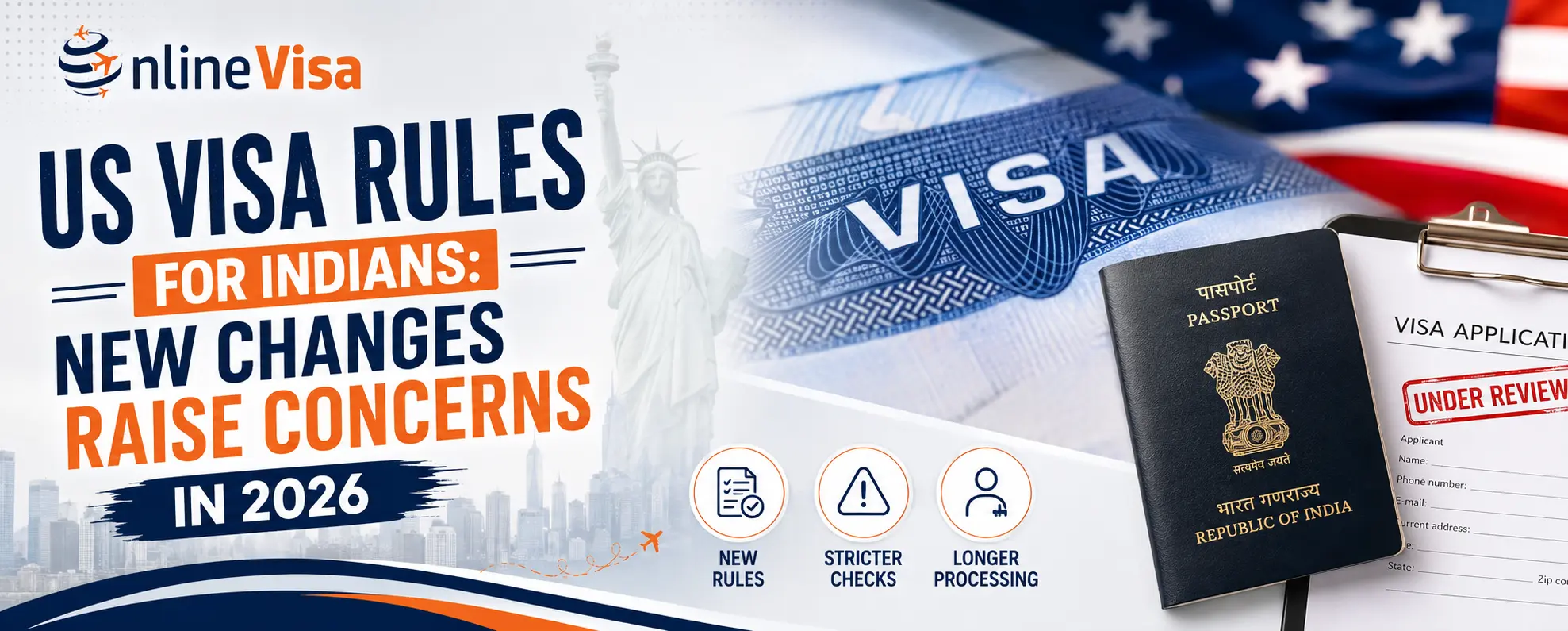
US Visa Rules for Indians: New Changes Raise Concerns in 2026
A new report reveals Indian H-1B visa holders in the US often earn higher salaries than many American graduates. Learn what the data means for skilled workers and future H-1B applicants.
Recent policy changes have made U.S. immigration processing more stringent. One of the key developments is a new approach toward incomplete immigration applications, under which authorities can reject an application without first giving the applicant an opportunity to provide missing documents.
For Indian applicants, these developments highlight the importance of submitting complete and accurate documentation from the beginning.
What Are the Latest US Visa Rules for Indians?
The latest US visa rules for Indians are part of a broader tightening of U.S. immigration and visa procedures.
According to recent reports, the United States has introduced stricter scrutiny across several immigration categories. Applicants may face greater consequences if their applications are incomplete or lack required supporting information.
Previously, applicants could in some circumstances receive a request for additional evidence or missing information. Under the new USCIS approach, officers are no longer generally required to issue such requests before taking action on an incomplete filing.
This makes careful preparation increasingly important for anyone applying for U.S. immigration benefits.
Why Are These Changes Important for Indian Applicants?
India has a large community of students and professionals who depend on U.S. visa and immigration pathways for education and employment.
Changes to U.S. immigration procedures could therefore have an impact on:
- Indian students planning to study in the United States
- Skilled professionals seeking employment opportunities
- H-1B visa holders and their families
- Applicants pursuing employment-based permanent residence
- Individuals preparing immigration or visa applications
The August 2026 U.S. Visa Bulletin also continues to highlight the importance of employment-based immigrant visa availability, with India remaining an important country in employment-based categories.
Student Visa Applicants Could Face Additional Uncertainty
Indian students considering U.S. universities are also watching proposed changes to student visa policies.
Recent reporting has highlighted possible changes involving student visa duration and post-study options. These developments could influence how international students plan their education, work experience and longer-term immigration pathways.
Students should therefore check the latest official requirements before making decisions based on older visa information.
Employment-Based Immigration Is Also Under Greater Scrutiny
The changes are not limited to students. Indian professionals working in the United States could also be affected by proposed changes to employment-based immigration policies. One proposal under discussion could reduce the flexibility currently available to some H-1B workers after losing employment.
At present, eligible H-1B workers can generally receive a grace period of up to 60 days after employment ends. A proposed change could significantly reduce this flexibility if it becomes final. However, this remains a proposal and should not be treated as an enacted rule.
This distinction is important because immigration proposals can change before they become final regulations.
Complete Documentation Is More Important Than Ever
One of the clearest messages from the latest developments is that applicants should pay close attention to documentation.
Applicants should carefully review:
- Visa and immigration forms
- Passport information
- Supporting financial documents
- Education and employment records
- Letters and certificates
- Application fees
- Additional documents required for the specific visa category
An incomplete application can create unnecessary delays or, under the new USCIS approach, potentially result in rejection without a request for additional evidence.
Should Indians Look at Alternative Travel Destinations?
The tightening of U.S. immigration policies may also encourage some Indian travellers to consider alternative international destinations for tourism and short-term travel.
Countries across Southeast Asia remain popular among Indian travellers because of their accessibility and tourism infrastructure. For travellers considering Malaysia, searching for how to apply Malaysia visa online can be a useful starting point when researching current entry requirements and application procedures.
However, visa requirements vary according to nationality, purpose of travel and current immigration policy. Travellers should always verify the latest requirements through the relevant official government channels before applying.
What Indian Applicants Should Do Now
Anyone planning to apply for a U.S. visa or immigration benefit should avoid relying solely on older information.
A practical approach is to:
- Check the latest official U.S. visa or immigration requirements.
- Identify the exact visa or immigration category applicable to you.
- Prepare all required documents before submitting the application.
- Review forms carefully for errors or missing information.
- Keep copies of submitted documents and application records.
- Monitor policy announcements that could affect your category.
- Seek qualified immigration advice when your situation is complex.
Is America Becoming Tougher for Indians?
The latest developments indicate that the U.S. immigration environment is becoming more demanding, although this does not mean that U.S. visas are closed to Indian applicants.
Instead, applicants are facing an environment where documentation, eligibility, compliance and scrutiny are increasingly important.
For Indian students and professionals, the key takeaway is to stay informed and prepare applications carefully rather than relying on outdated visa information.
Conclusion
The latest US visa rules for Indians reflect a broader shift toward stricter immigration enforcement and more detailed application scrutiny in 2026.
From stricter handling of incomplete applications to proposed changes affecting students and skilled workers, the evolving U.S. immigration environment could influence the plans of thousands of Indians.
At the same time, applicants should distinguish between rules that are already in effect and proposals that are still under consideration. Checking current official information before submitting an application remains essential. For Indians planning international travel, the U.S. is not the only option. Destinations such as Malaysia may also be considered depending on travel plans and eligibility, with travellers able to research how to apply Malaysia visa online and verify the latest requirements before making arrangements.
Related Articles
 Travel & Visa News
Visa Interview Questions and Answers: Complete Guide to Success
 Travel & Visa News
Japan Visa Processing Time for Indians: Complete 2026 Timeline
 Travel & Visa News